Bad Influences
Neil Gaiman, Amanda Palmer, and the seductive nihilism of the gothic feminine aesthetic

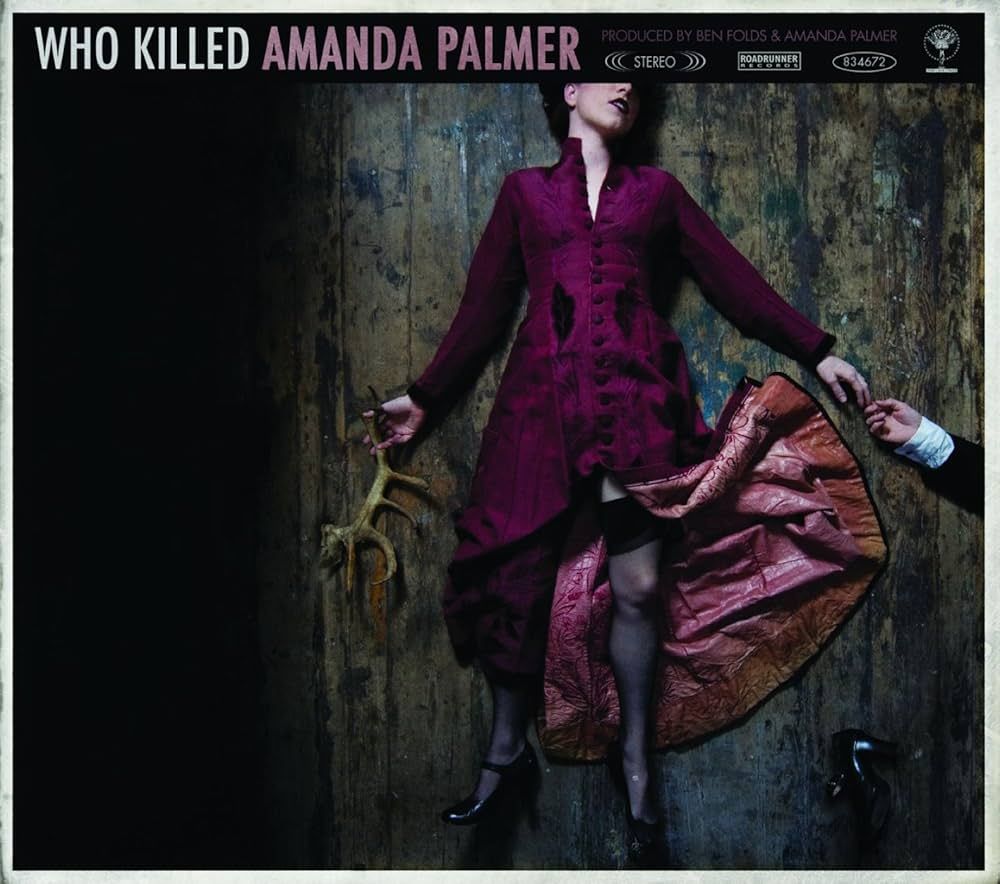
Author’s note: I wrote this about a year ago (i.e. winter 2025) but I waffled about posting it, and the news cycle moved on. I figured I would never post it, but recently Neil Gaiman has resurfaced trying clear his name (not happening, buddy), so I guess it is sort of relevant again. For a more in-depth and nuanced (and just fantastic) discussion of The Sandman and Gaiman by another trans woman who knows way more than I do, check out this piece from February 2025 by Elizabeth Sandifer.
I usually prefer not to dig into true crime stuff, but the recent revelations about Neil Gaiman and Amanda Palmer were tough for me to avoid, because I have a strong relationship with both their bodies of work. The primary conversation around this topic should be about the crimes themselves and the wellbeing of the survivors, but a secondary conversation always takes place alongside it: what does it mean to love the work of someone who’s done such awful things?
There are two schools of thought on this conundrum. The first is to “separate the art from the artist” and deny that there’s anything to see here. The second has many more varieties and nuances between them, but they all boil down to the contention that an artist’s personal behavior should matter in how we evaluate their work.
If I have anything to add to this secondary conversation, it’s a testimony to the bad ideas these people encouraged me to entertain through their art—and to the power of art to sell and habituate us to bad ideas.
I got into the Dresden Dolls in 2007/2008, my last year of college. My friend had been into them in high school, when they were exploding out of the Boston music scene, but back then I’d found the music too Hot Topicky, its anger toward men too threatening. Now, with a couple of a couple of nervous breakdowns under my belt and a delayed adolescence finally coming into its own, the same qualities were sending me. I recognized myself in the protagonist of “Girl Anachronism”, with its lines alluding to psychiatric hospital stays, medication, embarrassed parents, and the characteristic traits of borderline personality disorder: “And I've got some issues to work through/ There I go again/ Pretending to be you/ Make-believing/ That I have a soul beneath the surface.”
In an age of Paris Hiltons and Zooey Deschanels, Palmer’s model of femininity—unstable, paradoxically prideful and abject, aggressive, preoccupied with morbidity, both victimized and openly manipulative—was one that I could actually see myself in, in many ways for the first time. This wasn’t the girl I wanted to be with, it was the girl I was. I’d had a similar revelation earlier that year when I read The Bell Jar, but Amanda Palmer’s song and dance act was a lot more fun than the grim monologues of Sylvia Plath’s Esther Greenwood, which, as relatable as they were, did not feature the superstar drumming of Brian Viglione. Through Palmer’s music, I could access feelings that none of the sad and/or angry men I usually listened to could reveal to me (except perhaps Kurt Cobain, but that’s for a whole other post).
Those feelings, it should be said, were flagrantly narcissistic, and Palmer’s racism, internalized misogyny, and greed were very well documented long before the current revelations. I wasn’t yet “woke” in my Dresden Dolls era, but even I found certain lines in her songs tasteless, to say the least (look up “The Jeep Song” if you must). Palmer’s music has a wonderful power and melodicism, mixing punk ferocity, 90s alternative piano pop, and Weimer-era cabaret flourishes, but its heart is vacuous and its attitude is bad, offering nothing but charismatic self-involvement. Back in the day, though, I guess I just didn’t care, because I was also charismatically self-involved, and Palmer was offering me a sense of solidarity—ah, other people have been crazy like I’ve been crazy. You could be a woman and have these feelings, think these thoughts. I’m not alone.
Of course, I didn’t believe I could actually become a woman, and I would continue to disbelieve it for more than a decade, but Palmer offered to be that woman for the both of us. Listening to her songs I could feel gender affirming feelings without confronting my gender identity issues, and I think part of the reason this was possible was because everything was sort of a big, dark joke to her, a big cabaret act—even sexual assault, in songs like “Lonesome Organist Rapes Page Turner” and “Oasis”.
In “Oasis”, a female friend, Melissa, betrays Palmer’s narrator after she’s raped at a party, spreading lies about her being a slut. The rapist is mentioned briefly as a “barbarian,” but he disappears, and there’s no attempt to hold him to account. This is realistic, perhaps, but it’s Melissa, not him, who becomes the true villain of the piece. “Lonesome Organist” is, as the title suggests, about an underage page turner in church who’s raped by the organist. As in “Oasis”, the survivor narrates the song, but Palmer’s angrily ironic tone on both recordings serves it all as bleak comedy.
Rape is certainly not the fault of these protagonists—Palmer is clear about that. What she isn’t clear about is that it’s the fault of the rapists. In “Oasis”, the protagonist is raped because she’s drunk and he’s a “barbarian”; in “Lonesome Organist” because she’s young and naive and he’s simply unscrupulous. The men are flat figures of evil; rape is simply the fate of girls and women.
It is hard not to draw connections between Palmer famously not paying her backing musicians on a crowdfunded tour and the callous cynicism her in music, or between her indifference to her husband’s predations and her garish, nihilistic portrayal of sexual assault in her music.
I first read The Sandman as it was being reissued, and around the time Gaiman and Palmer got married, in 2011. I’d attempted to read it before that, but as with Palmer’s work, it didn’t make sense to me until after my head cracked open in college .While he has apparently been happy to suspend his respect for femininity and women if he’s horny enough, and his work seems to enjoy depicting women’s suffering a little too readily, his female characters (there’s even a trans one!) are decently complex and speak very well for themselves, something attested to by his legions of female fans. He’s very much like Joss Whedon in this way. He gets it far from right, but he is at least interested, as a late 20th century male comic book writer, in women. He wants to give them their own stories, and his attempts are fairly admirable for the time. But when they aren’t, they really aren’t. In “Calliope”, a hack writer acquires the titular ancient Greek Muse and keeps her as his sex slave, by means of which (for some reason?) he becomes supernaturally talented. After many years of constant abuse and outrageous indignity for a literal goddess, she pleads that he hold up his promise to free her, giving Gaiman a chance to reveal his nihilist philosophy of art:
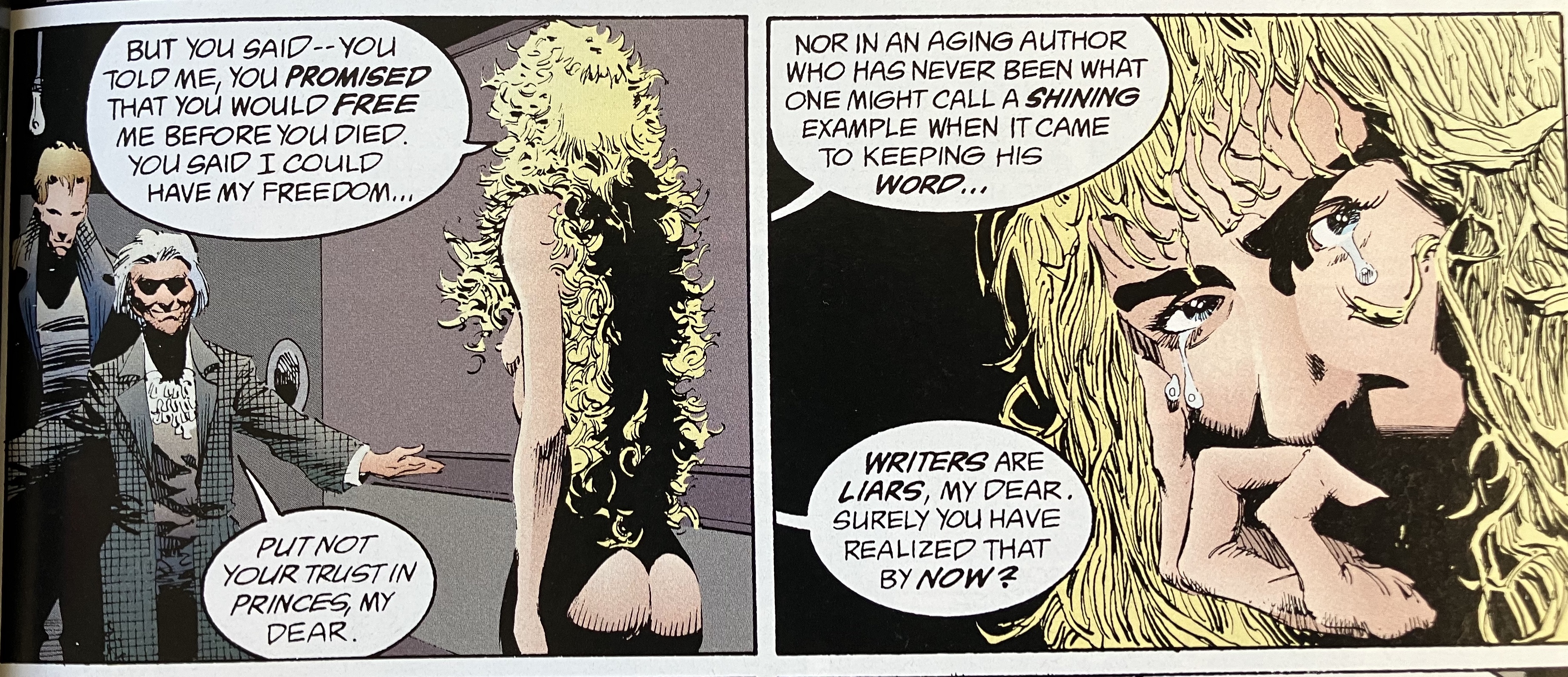
The psychological sadism here is extreme. Granted, Gaiman does not depict the villain’s behavior as sexy or okay—the horror here is precisely the horror of sexual abuse—and I wouldn’t argue that this sort of subject matter should never be depicted, or that it should only be depicted by certain kinds of people, or that it necessarily predicts Gaiman’s future behavior. I would argue, however, that when Gaiman has his villain declare that “writers are liars,” he does seem to have meant it. Many years later, he said something similar to Amanda Palmer, as she recalls in her book The Art of Asking. When he tells her he doesn’t believe in the authenticity of romantic love, she asks him, incredulous, how he could depict romantic love so convincingly in stories. His simple reply: “Writers make things up.”
What’s unnerving about “Calliope”, then, if only in retrospect, is that Gaiman chose an obviously anti-rape story, of all stories, as the place to undermine his own moral responsibility as an author in favor of his sheer capacity to charm his reader. This, at the very least, a cheap and lazy position to take as a writer. Genre fiction, I think, should be a place not to lie, but to tell truths so deep that, paradoxically, only fantasy can contain them.
None of this occurred to me at the time, of course. I just loved the idea that I was gobbling up this comic book for goth girls, which was very much The Sandman’s reputation and what attracted me to it. It felt like confirmation that I was, in my heart, one of them. I was still living as a frustrated man, however, and I identified ruefully with the series’ male protagonist, Morpheus, a stubborn, sulky asshole whose emotional intelligence lagged painfully behind his creativity and wisdom. Although Gaiman, for whom Morpheus is a transparent self-insert, didn’t always take care to check Morpheus’ excesses (most forebodingly among them, his misogyny), he at least had the good taste to kill the guy off at the end, when his misdeeds finally catch up to him—a fate which, as far as Gaiman’s public life is concerned, is now befalling him. Which is interesting.
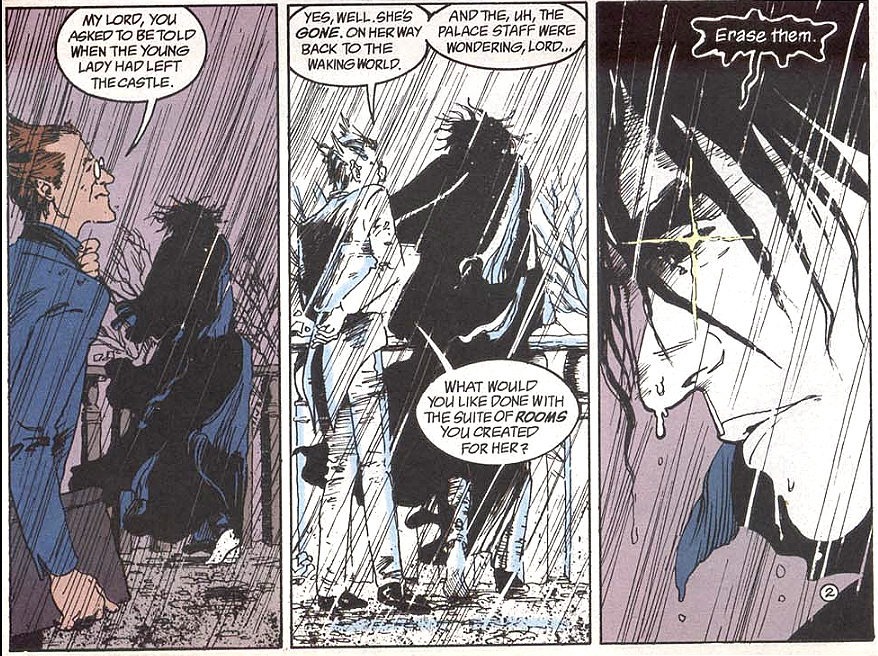
The series’ much-touted literary merit is mostly hogwash—it’s just an unusually intelligent, erudite piece of pulp fantasy, dourly pornographic. Gaiman’s world is profoundly and seductively melancholic, clinging to mythology as an indispensable metaphor in the face of the certain disenchantment of modernity. Gods and beings more powerful than gods abound, and yet it seems as if, despite a rigid hierarchy of greater and lesser entities, no one is really in charge of the Multiverse—it’s neoliberalism doubling back to paganism, a clash of wills from top to bottom, tolerable only by the possibility of kindness and love (whether or not Gaiman believes in them).
What change is possible can come only from the top—in my reading, the cosmic order, represented by Morpheus, is the true villain, and it defeats even him. I think this quality is the source of the comic’s enduring appeal to teens and twentysomethings struggling with youthful disillusionment. It makes a certain level of despair feel romantic, even thoughtful. And in some ways, it is—retreat from a mad world isn’t necessarily a vice, as long as you eventually find something to do with yourself.
Back in the day, The Sandman was the only DC title with a predominantly female reader base, and that makes sense: in its emphasis on our helplessness in the face of cosmic forces, and of the ultimate futility of resisting them, the series’ outlook chimes with the outlook of femininity under patriarchy, in contrast to the crypto-Nietzschean masculine outlook of most mainstream superhero comics of the time. Queer readers love it for the same reason so many of them love astrology: it teaches us not to try to master fate, but to cooperate with it. Those of us whose personalities lean feminine know the wisdom in this: self-assertion, especially in the face of masculine authority, can lead to rejection, punishment, or even death. A whole cosmology that functions this way is easily plausible to us—whereas, for the average male reader, especially of 80s and 90s comic books, the whole thing probably came off as, well, sorta gay.
It’s impossible to say exactly what form of self-delusion allowed Gaiman to imagine he had proper consent for the things he did to the women who’ve come forward, but the connection between his false beliefs about what he was doing and the fatalistic sermonizing in his work is obvious. Accepting the order of things as they are means accepting the whole ridiculous, cruel structure of masculine authority and your limited agency as a feminine person within it. One way to cope with this unenviable position (and a perennially popular way to sell it) is to romanticize it. This is the stock and trade of gothic literature, from the prudish lust of Twilight to the pretensions of Robert Eggers’ grotesque, soulless Nosferatu.
Gaiman is sneaky about how he does this. Constantly in The Sandman, Morpheus is shown to be reckless, impulsive, and arbitrary in his judgements, but his authority is never questioned in itself. Even when characters are allowed to question the order of things, they are rarely able to overturn it. A major plotline involves one of the Endless, Destruction, abandoning his post. He insists to the others that they should all do the same, and let things work themselves out. None of them follows suit, and Destruction’s challenge to Gaiman’s cosmic hierarchy vanishes along with him. Associating anti-hierarchical politics with the personification of destruction itself is certainly a choice on Gaiman’s part, one that quietly stands against his ostensibly progressive values.
Among female characters, one of the best examples of the futility of protest is Wanda Mann, the trans character in the sequence A Game of You. Wanda wants to participate in a ritual to the Moon to save her friend, Barbie, but she’s told that only biological women can participate—those are the Moon’s rules, plain and simple, and the narrative upholds them. Gaiman has sympathy for Wanda, but he refuses to allow her femininity be anything except a fantasy. The painful futility of her attempts to become female are constantly emphasized in the script and the art, even in the end, when, in death, she is given a cis body:
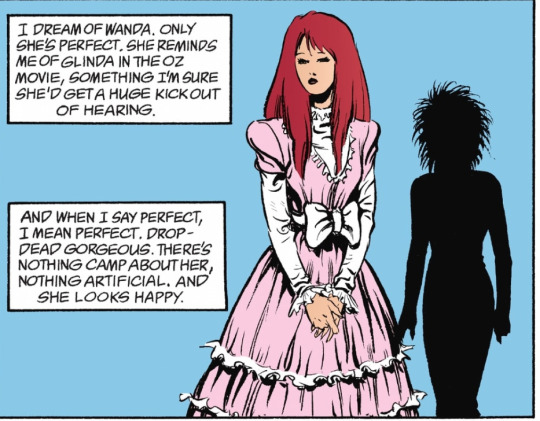
The condescending, faux-compassionate transphobia of this panel is crazy to me now, and I think it speaks to Gaiman’s duplicity as an explorer of the feminine1. Wanda’s ability to determine her own gender is totally denied—she is, instead, at the whim of different authorities. The Moon may be a TERF, but Death is a good trans ally, giving her what she wants because she was, after all, a good person.
The trouble here isn’t in denying the ontological truth of someone’s transness—Gaiman is, in a way, correct to suggest that gender is about desire. The trouble is his denial of her authority over herself, reducing womanhood to the status of a wish that can be granted, rather than the collaborative creation of an individual and their community. Ultimately, instead, it is Gaiman himself who decides whether or not Wanda really is a woman. The fact that he sides with her, even having Barbie write her real name over the male name on the grave erected by her family, doesn’t change the fact that he never allows her dignity in self-creation. Her own attempts are “camp” and “artificial.” He affords her plenty of other forms of dignity—she’s a wonderful, complicated character. But he reserves his right to her womanhood. She can only have it in death, and only with a glorified cis body.
This reminds me of Edgar Allen Poe’s pithy declaration, in his essay “The Philosophy of Composition”, that “the death then of a beautiful woman is unquestionably the most poetical topic in the world.”
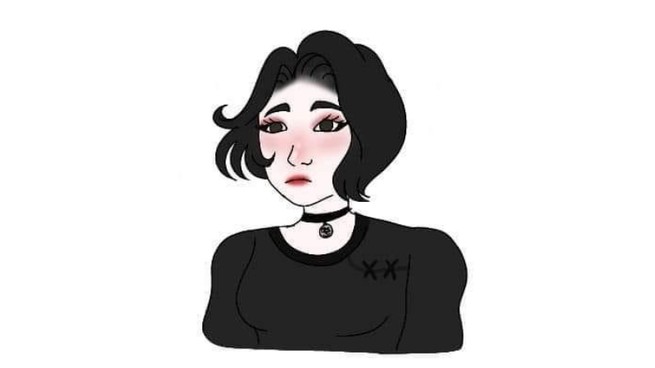
In the days I was discovering the Dresden Dolls and The Sandman, my own frustrated feminine self, buried mostly in my unconscious, felt like something dead on arrival. Sent along the masculine path both socially and biologically, I saw the self I wished I could have been most clearly reflected in the tradition of feminine tragedy that Poe considers the height of poetry. Palmer’s shtick, so to speak, was to take up this image for her own purposes, apart from the desires of men, and it helped rouse the ghosts of my imagination.
There is something feminist about this, I suppose, but it’s got to be the bottom of the barrel. The reanimated corpse of a dead woman is still a corpse, and Palmer’s vision of womanhood is nothing but suffering and madness, forever pre-political, determined, even in its victorious defiance of its enemies, by trauma, forever dependent on its victimhood for an ersatz sense of self. It’s a mood, no doubt, but it’s kind of bad for you.
So are the various moods evoked by The Sandman, another work of art by which I explored my femininity from a safe distance. Trained to consider femininity as a source of weakness, I enjoyed it mostly in secret, or under a thin veil of irony. What I hadn’t considered until I sat down to write this piece is that there’s something in the work itself that encouraged me, along with so much else I absorbed as a young person, to think this way about womanhood. In the same way I held my womanhood hostage, relegating it to the status of a dead and hopeless dream, Gaiman allowed Wanda to live fully only in death.
I don’t think this is strictly a trans point. As the multifarious possibilities of girlhood begin to vanish, many cis women are also forced to hide something of their own womanhood from the world. Remembering The Bell Jar, I’m struck again by the symbolism of Sylvia Plath’s suicide attempt—the way she buried herself in the floorboards of her family home, as if she were the corpse of someone murdered, or perhaps a secret hoard of cash. That’s the attempt less of someone who wants to die than of someone who considers herself already to be dead, or else too valuable to be spent on such a restricted life.
While the metaphor of the dead woman holds a truth of patriarchal oppression for women, it often becomes eroticized in men, who perpetuate that oppression; women, in turn, learn to eroticize themselves in accordance with it, even if primarily for their own amusement. The goth girl is as popular as ever, portrayed as the natural female companion for nihilistic guys in online culture. She is the girl who has embraced death and thus silence. She will not fight you—she’s given up fighting. You can do whatever you want to the goth girl. She’s based—she doesn’t care.
I’ll always love gothic femininity for helping me awaken to my transness, providing me with a powerful metaphor with which I was able to see myself. It’s a complicated thing, like everything we’ve inherited from our culture. Coming to terms with its dark side, with the violence and repression it can be used to justify, doesn’t mean abandoning it as some sort of vice. Death is beautiful, from a certain point of view, and so are women. Representing death as a beautiful woman isn’t the same thing as enjoying the death of a woman, whether it’s a physical death or the death of her agency and/or sanity. The problem resides in the minds of those who would collapse the two ideas.
I think the survivors of Gaiman’s predations are going to be okay—not because what Gaiman did to them (with Palmer’s assistance) is okay—it’s atrocious—but because people, with community support, can and do survive such things. This is not emphasized enough. We’re hesitant to emphasize it for fear it will minimize the gravity of these crimes, but our hesitation can have the opposite effect, encouraging us to view survivors as irreparably damaged targets for our perversely enjoyable pity. I can only admire the courage of Gaiman’s victims in going public with this information, which must be terrifying. That courage is itself a testament to their ability to survive. They are not dead. They have things to tell us. We must listen.
Gaiman is said to have regretted his portrayal of Wanda more recently, but given what we know about him now, I just don’t know what to think about that. ↩