The Air In Utopia Is Poisoned
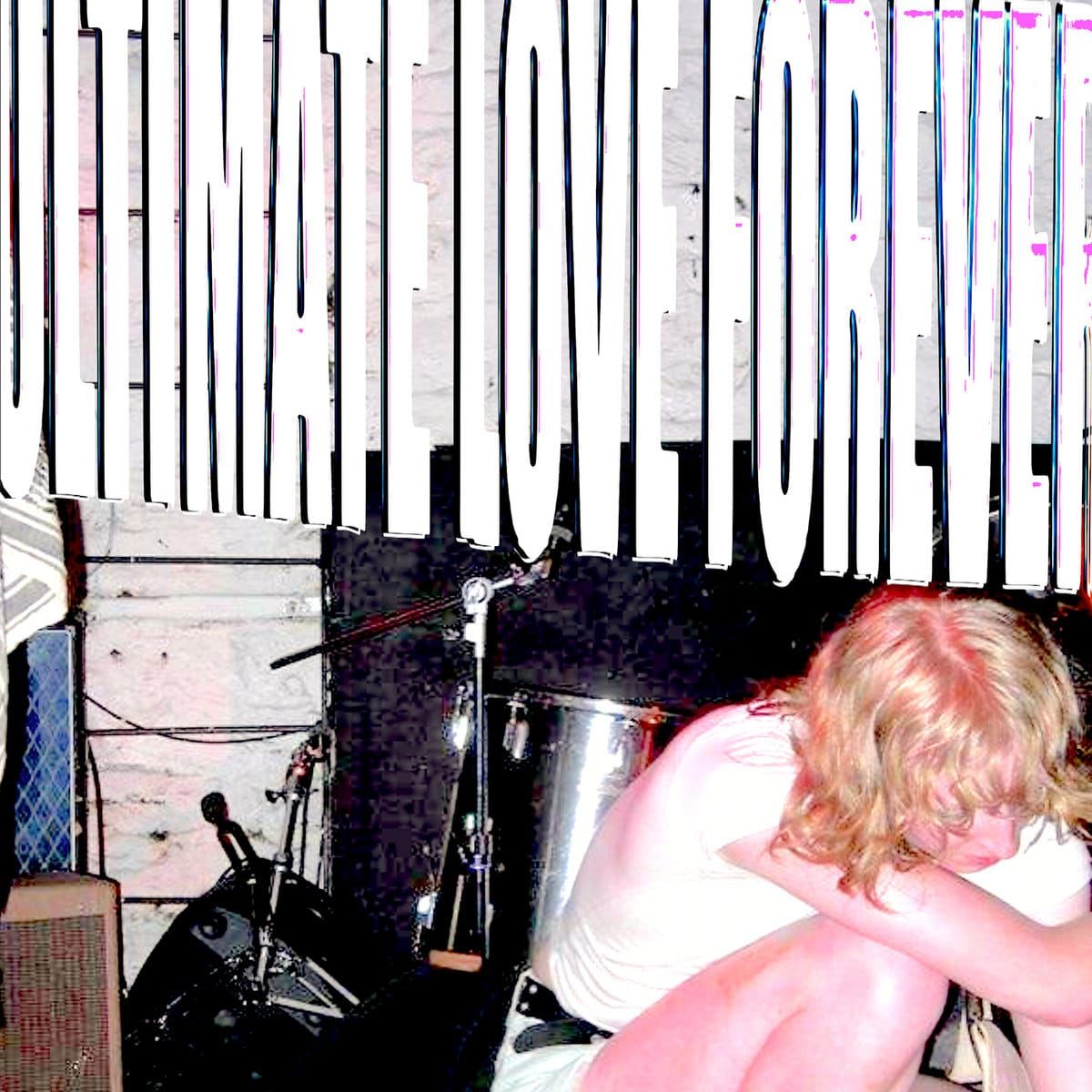
Has Lex Walton arrived? I thought she already did, but that's apparently the narrative we're going with so sure, with Ultimate Love Forever, she's arrived.
Someone from the Internet invited me to coffee when I got to New York City (I live there now) and inevitably we got on The State of the World. She is a very educated person and I wanted to say something smart, but all I could sputter out was that I hate the State of the World. The current administration and its hooting followers' every action and apparent thought suggests a hatred of truth, beauty, and goodness that I, despite being a committed practical atheist, could only call Satanic.
The whole thing is also just very unintelligent—all of it reactions to made-up phantoms or real problems with made-up explanations and counter-productive solutions. People are being murdered in the streets, disappeared to concentration camps, cruelly deported, unceremoniously laid off, and terrified into fleeing their home states, all at the behest of a bunch of gormless billionaires, pearl-clutching property owners, red-faced HVAC guys, and Twitter contrarians—and that's just what's going on domestically. And they're doing a bad job of all this—sloppy, arrogant, thoughtless. Not that I want them to succeed, but it's insane to watch.
I grew up in the 90s and 2000s in southeastern and central Massachusetts, and there is a word we used to use to describe cultural situations like this and Presidential administrations like this: "retarded." It is of course not exclusive to us, but in the local accent, one can say this word with a certain relish that's hard to reproduce anywhere else. We love it, but this word is also quite offensive to intellectually disabled people, and by the 2010s it had become a shibboleth for most progressives. I find this rule stupidly easy to follow, especially when various synonyms are still allowed in all but the most vanguard circles—see, I just used one. No problem. There are much harder ways to prove you have some baseline of compassion, or that, at the very least, you're willing to do as the Romans do. Right-of-center people, however, get extremely agitated about this ban, and I suppose this has to do with the fact that they are ingrained with such a sense of entitlement in so many respects that this simple verbal restriction seems like a heinous injustice.
All this to say that Lex Walton (I last referred to her as Alex, but I guess it's Lex now) is correct to observe, in the punchy way one must in song lyrics, that "Cops are killing moms in their cars 'cause you wanted to say 'retard'" ("Hipster Runoff"). I just said some similar a couple paragraphs ago—everyone has observed this—and that's part of the problem she's trying to deal with on her Sub Pop debut Ultimate Love Forever, from which "Hipster Runoff" has become the most talked-about track. Walton, who's Gen Z, scathingly calls out the hip millennial cynicism toward "activism" (read: leftism) that left us worse for the wear on the other side of the 2010s. "I know it's obvious, it's the obvious thing to say," she admits. "It's not going to change anyone's mind." Nonetheless, she insists on telling us that she hates everyone who gave up. Why bother saying so? I suppose because, as Henry Rollins put it, "if you hold back, you get cancer."
Walton elaborated on her specific millennial targets in an interview with fellow Ghost blog Last Donut of the Night:
You have the failure of the battle for Seattle, Occupy, and Obama—all these things adding up to this extreme nihilism in millennials. All these millennials on the left become totally disillusioned and irony-poisoned, and then a lot of them turn right.
Not everyone did, of course—some millennials are largely responsible for the revival of Marxism and social democracy in the United States under the banners of the Bernie Sanders campaigns and the DSA, and that's something to be proud of, I think, but Walton isn't mad at Zohran Mamdani or the hosts of Chapo Trap House (on which she recently appeared)—she's mad anyone who preferred to gawk at the world and crack jokes instead of face and tell the truth: this shit is and always has been morally intolerable, and we should have had the baseline courage to say so instead of hold ourselves back from feeling. Terminally brainwashed young conservatives like Ben Shapiro and Charlie Kirk probably never had a chance, but liberal-educated, This American Life listening, Trader Joe's shopping, urbane hipsters in deep blue cities had no excuse—a lot of us, too many of us, just found politics, apart from some vague aesthetic distaste for post-9/11 jingoism, SUVs, and country music, gauche. But no, we didn't want to think about it, and too many of us were too comfortable.
"But 2008, the subprime—" Stop. No. Look out there, man. It got so much worse for so many more people.
"Politics is the art of the possible," I recently saw a liberal saying. Dead wrong: politics is the art of creating possibility. There are no escape hatches. We're going to have to blow a hole in the wall, with whatever tools we have. In the face of contemptible, petty, historically determined hate, it is vital to practice Ultimate Love Forever, however you can, right now. Walton isn't just griping about edgelords, she's preaching divine mysticism—and with heavy guitar distortion. Righteous. That's the improbable joy, in the midst of the exasperated pain of actually caring, that can be heard in the closing title track, which knowingly—with Walton, I think, it's always knowingly, and loudly so—borrows the "Lust for Life" beat.
There there now, let yourself bounce to that beat. Doesn't it feel good to care? About anything? Ten years of therapy hasn't cured your anxiety. Maybe love could work—not trying to leech it off some poor sucker, mind you, or buying your way into it (god forbid), but practicing it. Of course, this song is more about wanting love than the practice of love, but maybe the first step toward the practice of love is admitting you want it—and on a political level, that means admitting you hate this, that your conscience is scandalized daily, that people—not just you and your kind of people, but everyone—deserves so much better.
It is right to rebel, even if it accomplishes nothing. At the very least it lets suffering people know you see them, and it stops your own soul from getting twisted up into some demonic shape. Youth Against Satan is the name of Walton's personal imprint for a reason.
Apparently aiming to embody what she preaches, the Lex Walton of Ultimate Love Forever has fully liberated her own gaze from her navel. I know she's made music in between, but I haven't listened to much of it, so it's particularly notable to me that the tormented introspective persona of 2023's I Want You to Kill Me is far more circumscribed here—she already covered that whole thing, time to get onto the rest of the world. A couple songs on the record's second half, "I Wish I Was an M80" and "Adrian Borland Will Have His Revenge On London" (whose riff, in classic Waltonian fashion, cribs from the Nirvana song its title alludes to), are more introspective, but differently so, which I'll get to later.
In general, however, much that made I Want You to Kill Me so great—Walton's agitated Morrissey/Lou Reed croon, her densely-packed, unpredictable song structures, her abundant sense of melody, and the blown-out intensity of the production, is intact—it's a bit more polished, sure, but it's a matte finish, not a glossy obscenity, and by ordinary standards, it's still quite harsh. This is not Walton selling out, this is Sub Pop buying in—also Pitchfork, who gave it an 8.3—and it's about fucking time. "My manager tells me guitar music is selling again!" Walton sardonically declares on the opening track, "For Thee I Sing," after observing the fascist nightmare of contemporary America, indicating that nobody recognizes the absurdity of her being on the cusp of indie stardom in this moment—and moreover, the absurdity of the fact that indie stardom still exists— than she does herself.
Ultimate Love Forever is also a lot more digestible than I Want You to Kill Me. At just about 20 minutes, it's really only half an album by most traditional definitions, but in this weird-ass era you can call whatever you want an album. I suspect Walton could have provided something three times as long and just as good, but there's strategic value in this, because she is an overwhelming artistic presence, and seven tracks—especially seven tracks that cover this much musical ground in such a short time—is more than a sufficient introduction for the unprepared, especially unprepared holdout millennial tastemakers who still aren't—and perhaps will never be able to get—used to the antic/frantic nature of so much Gen Z music.
IS LEX WALTON HER GENERATION'S BOB DYLAN??? The question itself is, of course, retar—excuse me—very silly. Just ask Conor Oberst. Tolstoy is the Tolstoy of the Zulus, and Lex Walton is Lex Walton. But I can't help but positively observe the Dylanesque nature of Walton's elevated, hiply passionate political patter, the quality she shares with the only singer-songwriter Nobel laureate of being so full of pure urgent poetry that her lines are always a bit ahead of the music, threatening to trip over themselves but never actually crashing out. Her lyrics don't have the same musicality as Dylan's, but the actual music more than makes up for it. Dylan, too, at least in his early years, insisted that we ought to give a fuck about what's going on in the world, even if he wasn't particularly politically committed—not in the way someone like Pete Seeger was, at least, but Dylan was cool and Seeger was a total dork—and we love him for that. Walton, to her credit, manages to be more urgently political and cool, positioning herself right in the dead zone (i.e. the sweet spot) of the geek/hipster horseshoe, much like Dylan rival Phil Ochs at his best—and also like Ochs, she can be wickedly funny. This record may have a rocket of punk rock strapped to its back, but at its core, it's folk music.
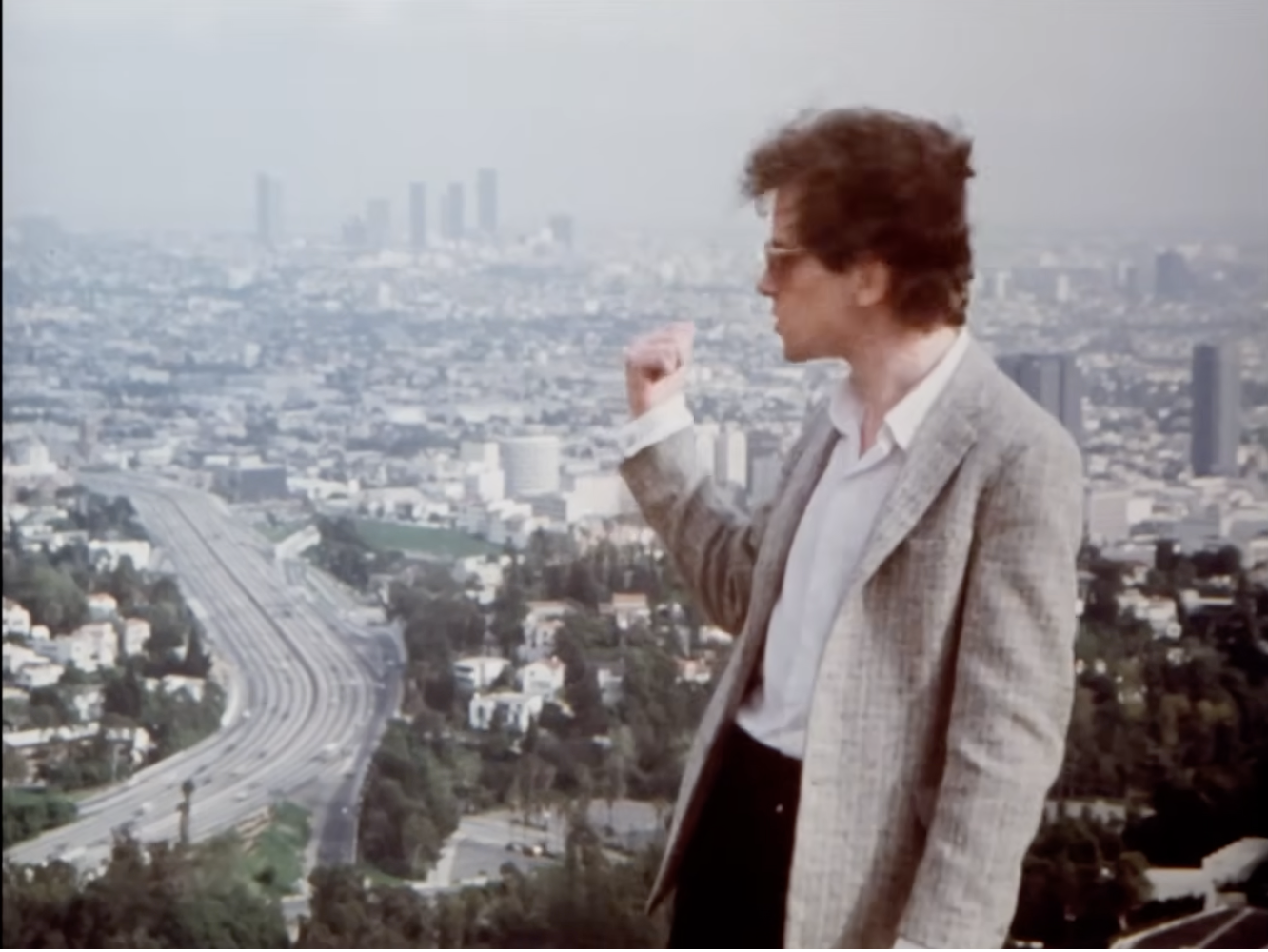
This is not a new idea. Brendan Mullen, who ran Los Angeles' legendary first wave punk club The Masque, says something similar already in 1981's The Decline of Western Civilization:
I think the kids are, more desperate or something like that, or more bored. Some of the better of the punk bands developed into, sort of, like, folk music [...] Now, instead of acoustic guitars, they have high-speed, 300-beats-a-minute speed rock. And yelling about the same things. About how their air is poison down there. You know: the air in utopia is poisoned. The final joke!
There has never been uncertainty as to whether Walton's musical persona is more desperate or more bored—she's entirely on the side of desperate, and as we've seen, on this record, she's quite pointedly raging against the worst of the bored. The bored have always been a part of the counterculture, alongside the desperate. They are sometimes the more privileged side of the community, sometimes just the more dissociated. Their concerns are more strictly aesthetic and hedonistic—they're less interested in building community, they just want to feel part of something and get their rocks off. The desperate, on the other hand, need all of it more. The community may well be their only family. If they crash out, they're booted to the streets, not back to the suburbs. Either that or they're just people of principle who want more than to just be cool and terrify the squares.
In the early phase of every artistic movement, the distinction between the bored and the desperate matters very little. Everyone's just excited to be there. Sometimes the bored make great music and are pretty cool—Sonic Youth, for instance. They can use their superior resources to create show spaces, record labels, PR campaigns and other key infrastructure. Other times, they end up blowing the scene up, because they're still driven by that indoctrinated need for a career. The dreaded hipster runoff is downstream from their meddling.
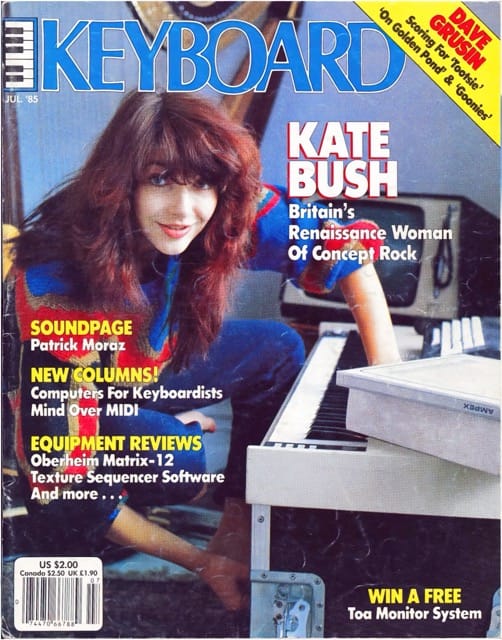
Not that it's exactly better to be among the desperate—Walton isn't wishing she was an M80 because she's doing fine—the old request to be killed is still here (I Want You to Light Me?) but at least this time she'll explode into a something pretty for a half second. In that lyric, we get a fractured narrative about a hookup with someone whose "face looks like a John Singer Sargent," an arrest, a declaration that "I'm tired of being a pass-around boy," something about a "Renaissance woman of concept rock" and a "neofolk detransition." What does it all mean? Fuck if I know, but the song pulses along, wryly but pleasantly, with Y2K-era pop sunniness, like a lackadaisical, lo-fi version of Sugar Ray or the half-forgotten OMC hit "How Bizarre", and there is something comical about that.
As I said earlier, this song is less explicitly political, but it may still have an implicit politics, because it shouldn't be this exhausting just trying to survive ("I was dying when I wrote this song/ and that goes for every song," she says on "Adrian Borland", whose suicidal subject she explicitly identifies with). People make their own choices, of course—I'm an existentialist, loud and proud—but capitalism also conditions those choices in shitty directions, generating gobs of bad faith. "Dress me up like the choices you make/ Dress me up as a punch line," Walton says. How often do we end up an instrument of others' whims and projections, whether those are the whims and projections of the Heritage Foundation or some bad fling, perhaps with a representative of the bored-geois, who's decided to use us to work through some shit? "We are the distinction between what we need and we want," she concludes, and while this is clearly a psychological observation, it also makes me think that if we'd respected this precarious tension on a global scale, we might not have let climate change, and much else besides, get so bad.
"USA = FAG NATION", the title a reference to a slogan of the hyper-reactionary, almost post-ironic Westboro Baptist Church cult, is another interesting track, seemingly a pastiche of the Yeah Yeah Yeahs, the Rapture, LCD Soundsystem and other punky dance music loved by millennial hipster wasteoids, but also, I think, throwing all the way back to the Minutemen, whose dearly departed D. Boon Walton vocally resembles here at least as much as James Murphy or Karen O. In the lyric, Walton refuses to be a tool of others as the song's quavering beat thrashes about as if in a straightjacket, seemingly unable to progress, its trebled-up guitars buzzing and howling like caged tigers glaring at zoo-goers, amounting to the most nervous listen on a very nervous album. A chant develops toward the middle of the song: "Some people we call martyrs, others we call police." It's a multivalent line, suggesting a systemic sorting of society into abusers and abused; it also suggests the pastime of deciding who is among the angels and the devils, respectively, in this famously "polarized" culture. Who are the real martyrs and the real police? MAGA, at their most earnest, considers themselves martyrs, too. As Tom Ripley said, "You never meet anybody who thinks they're a bad person."
The song's noise squall sounds like everything feels these days—too fucking much, and kind of obnoxious, but, in spite of myself, I still would dance to it. Actually, I think this song would be a lot more fun to dance to at a show than to just listen to on headphones as I tap out another one of my silly little articles. All of this is hell, the song seems to be telling us, and yet it keeps us engaged. It keeps us locked in. The power of Satan compels us. Stay woke, and never kill yourself.