On Wanting to Be Killed
A journey into Alex Walton's fevered and brilliant indie rock imagination.

I Want You to Kill Me: a very specific demand… Pay close attention to it. It’s not “I want to kill myself” or even just “I want to die.” I want you to kill me. I want to die by your hand, but upon my request. Imagine Cheap Trick singing this. You can’t.
And Alex Walton, it should be said, sounds nothing like Cheap Trick on this 2023 album, but more like some sort of collision between the anti-folk babble of Jeffery Lewis, the beatified lowlife bubblegum of the Velvet Underground and their innumerable apostles, the blissfully noisy, lo-fi garage rock of the 2010s, and that one girl in the psych ward group therapy sessions—you know the one. Nobody really minded her talking so much, because nobody else wanted to talk so much.
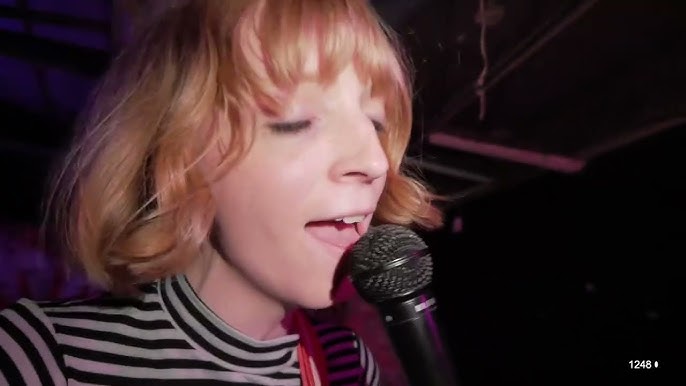
For 70 minutes, enough to nearly fill a whole CDR, Walton talks a blue streak, her voice and every other instrument in the red, papering over her own inventive arrangements with a self-deprecating, almost uninterrupted tirade about her desperate twentysomething existence. She sing-speaks in an agitated croon, her lyrics too wordy for simple melodies, usually just moving up and down between a couple of nearby notes. She paints a picture of herself (at least in the time of her life in question) as mentally unstable and self-destructive, a maker of questionable choices, sexual and otherwise. She wants to be loved most of all (“Tell me I've been a good girl,” she begs on “Please Hold Me”) but she holds herself so tight and scrutinizes herself so relentlessly that it’s hard to imagine how she could relax enough to let anyone else love her. “more histrionics, i know, i know,” she writes in her own liner notes. “there's a lot of fucked up shit happening all the time, and i ain't no angel, that's for sure.”
Walton is a reverent student of the Canon, displaying her capacity to play with style on many of the tracks here, from the Jerry Lee Lewis pastiche of “This Song Is Meant to Hurt You” to the sardonic circus waltz of “Sort of Girlfriend” (with its wryly aborted “Psychotic Reaction” interpolation), to the Pink Floyd vibes of “Please Hold Me”. There’s intelligence, humor, and musical talent radiating from every track—almost too much. These songs seem cramped in their containers, uncomfortable, willing their own transformation into something else—abruptly stopping, sharply changing in vibe, wandering into pretty diversions, and often so fractured within themselves that the borders between them blur into one long collage of fragments and testaments.
Kevin Barnes and Bob Pollard do stuff like this, but in a spirit of precocity, whimsy and flamboyance; Walton, though equally clever and skilled as a songstress, is on a darker trip here. Pop candy is everywhere, but it doesn’t go down easy. Every avenue of escape seems to lead deeper into the problem at hand. Everything is so damn loud, the textures so harsh, simulating a hypersensitive—not to say hypervigilant—bodily experience, in which pleasure and pain are no longer opposed but assaulting you on two fronts. It makes me remember how it felt to be “emotionally labile” and this or that comment or idea makes your mind just completely spins out. Such an experience is not like being on speed, having a panic attack, or being hypomanic. It’s a very specific kind of excess, a crazy dissociative orgy of negative self-talk after which you’re left with only the knowledge, but not exactly the memory, of what you’ve done or said.
The drama level here is almost gothic, with song titles like “The Greek Tragedy In Action” “Salvation Attempt”, and “The Death Of Poetry / Madonna Of Humility”. At one point toward the middle (at the end of “Extremely Good Ideas”), she actually just starts wailing. This is emotional, but it is not emo. In emo, there’s a kind of ecstasy to feeling so bad, to being so on the edge. There’s a joy in it, but there is very little joy here—there is humor and humanity and relatability, and the spirit is generous and good, but the vibes are mostly bad. This is the music of abjection, the hard drugs of catharsis, presented to the listener in the way a cat presents a dead mouse.
One can feel exasperated by all of it—why not let these songs breathe? Why busy it up with all of this lyrical shitposting, entertaining and even touching as it often is? But that would be a misunderstanding—Walton knows very well what she’s doing. This album isn’t really about the songs, as least in their petty, ordinary function as little melodic delivery devices. It’s a complex piece of meta-memoir that just so happens to be full of wonderful hooks and carefully dialed-in abrasion, in the midst of which Walton performs an exorcism on herself. It’s a one woman musical, and her musical persona here is the waif cast adrift in the winds of fate & fortune, as talented as she is unfortunate, “never knowing how it feels to be loved/ Except by force” (“Preteen On Omegle Blues”).
The way the world works on this record is 1) things happen to Alex Walton, and 2) she writes songs about them. If she had a hand in things, it was never a totally free hand: “There was choice involved, but there was always, always force” (“Preteen On Omegle Blues”). Happy times are fleeting and founded on sand—in “Salvation Attempt #39”, she wins the love of a man who truly sees her for what she is—but only because he’s severely mentally ill and/or messed up on drugs, taking bath salts and declaring her the “daughter and bride of Christ.” “I wish he wasn’t crazy,” she sighs, in one of her tenderest vocal moments. Not the kind of guy you want to bring home to mom and dad, which is her dream—just to be a “nice, normal, pretty daughter with a job and a boyfriend” (“Suicide Museum”).
Every self-defeating act she commits or permits is an act of rebellion against the forces that have made such dreams impossible, but this rebellion will always be chaotic and fruitless because the subject of these songs hasn’t developed a position of agency from which she might actually retaliate—and that, in turn, is because she survived by failing to retaliate—or, as she puts it, speaking in the second person in “Hyperconfessional And Overwhelmingly Sincere,”: “You’ve been conditioned to cry whenever anyone is angry at you or wants you to be better.”
This is why she needs you to kill her: because you have always been the one with the power to condemn or to forgive, regardless of her agency. She has no options but to demand love—or death—whichever’s more convenient.
Delivered at a punk speed with a propulsive, somersaulting bass line (her bass parts are always fantastic), “Hyperconfessional And Overwhelmingly Sincere,” is perhaps the key song: a litany of humiliations, large and small, from childhood through early adulthood, delivered breathless and panicked in a sped-up chipmunk voice that underscores both that panic and a sense of regression to childhood vulnerability. These humiliations are parental, social, sexual, and transsexual, and one of the wonderful things about the song as a piece of trans art is how it places common transfeminine experiences like being stared at like a museum piece (her simile) or being felt up by the TSA alongside other, not explicitly trans ones like embarrassing yourself in class or having your sexuality rejected by an intimate partner. Being trans is just another one of the many sources of her abjection—a big one, but by no means exclusive.
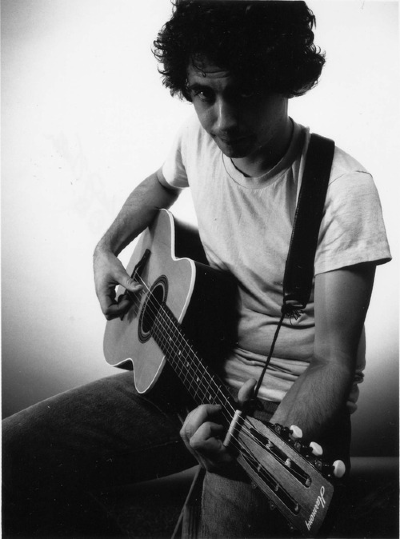
Daniel Johnston is the patriarch of this sort of earnest, bloodletting singer-songwriter stuff, especially in the world of home recording, and she may be referencing him in the title of the song “Suicide Museum”, which recalls Johnston’s “Museum of Love”. Johnston sang candidly about mental illness and romantic desperation, self-consciously dramatizing his life in a body of work which is nothing if not “hyperconfessional and overwhelmingly sincere”—but he also situated himself as the hero, and in a rather uncomplicated way. Walton, by contrast, betrays an acute awareness that while she may not be wholly or at all responsible for a lot of her suffering, she is guilty of milking it for her audience, and also of using her songs to snipe at people with whom she has beef (“This Song Is Meant to Hurt You”). In “Ten Thousand Friends For My Best Song”, she compensates for the one-sidedness of her tales by reading a list of her own flaws, solicited from named friends. It’s not that she doesn’t want to be related to—she just has the integrity to refuse to make it easy, a determination to tell you so much about her particularly that you can’t parasocially simplify her. If you’re the sort of person who thinks it would be funny to call her “Jean Cocteau VEVO” if you saw her in public, rest assured, you get called out too (“My Favorite Song”).
For Johnston, sincerity is the ultimate virtue, but Walton wonders whether sincerity is completely possible. “songs that are True,” she promises in her liner notes, “if that is something that a song can Be, if not faltering from mine own Quivering And Inherently Flawed Subjectivity.”
And even if sincerity is possible, it is advisable in doses so high that it “cuts anyone it touches” (“Hyperconfessional And Overwhelmingly Sincere,”)? Are people going to get that, despite the sincerity, it’s still art? If you’re too sincere, does it cease to completely be art, degrading into the sort of uncomfortable spectacle that Johnston detractors decry his fans for enjoying? “I wonder how much comes off as coping and seething/ And how much is actually coping and seething,” Walton muses in “Ten Thousand Friends For My Best Song”. Later in the same lyrics, she declares that “songs about real life only suck the life out of you/ And make each other cry.”
Johnston believed that the character of Daniel Johnston could save him. Walton knows that this is not going to happen—if anything, the Alex Walton on the record threatens to swallow up the Alex Walton in real life.
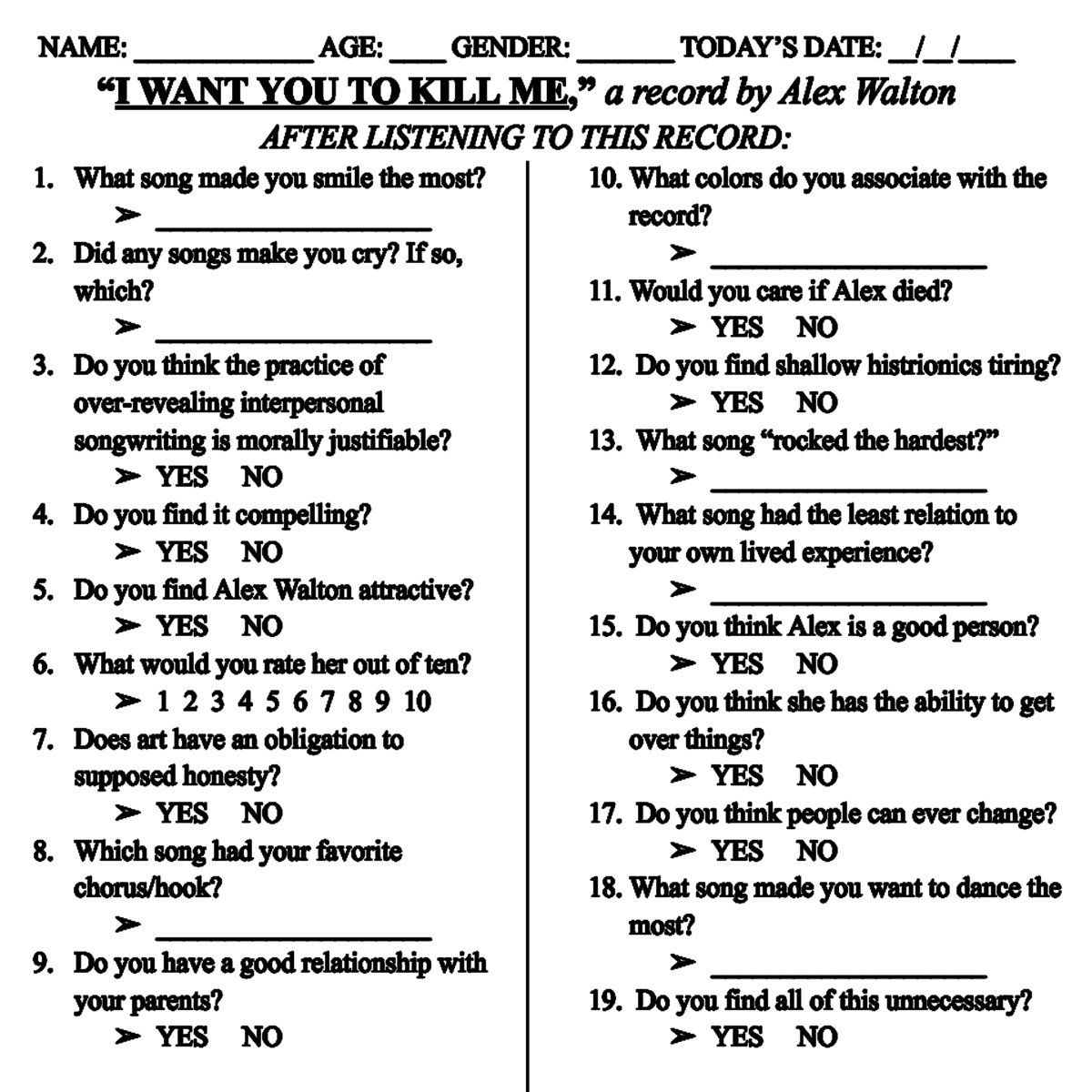
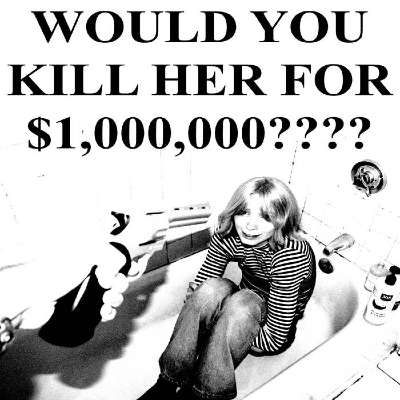
Is I Want You to Kill Me an invitation to hate the heightened version of herself that Walton performs, or will it all, in the end, prove her infinitely lovable? The album’s cover image asks this question quite literally. It’s a clinical psychology assessment edited to ask questions not about your depression and anxiety, but about your feelings about the album and Walton. No. 15: “Do you think Alex Walton is a good person?” No 11: “Would you care if Alex died?”
Even though the record is all about her, the assessment implies, it’s really all about the chance to have some kind of impact on you, the listener, the only person who has the power to kill her. “This is all for your benefit as much as it is for mine,” she says in the liner notes.
“Is it autofiction if it isn’t fiction?” she asks on “Extremely Good Ideas”. Writing workshops train you to regard the “speaker” of the poem as at least nominally separate from the poet. This is mostly a professional courtesy, since most poets are writing more or less as themselves. If we didn’t accept the fiction of nonfictional autofiction, the workshop would devolve into something resembling the Synanon Game more than a critique.
By admitting that what she is saying is actually true, but that she also wants it to be regarded as a sort of fiction, Walton elevates the tension behind the speaker/poet distinction to center stage—if this is a concept album, that is the Concept. One might assume this threatens “the speaker” more, but we find that the poet is in greater danger.
Now that Alex Walton is done with this album, it will never change. Even though it ends with her declaration that she no longer wants to die, its title will always beg you to kill her. You can put it on and listen to it, and you will always hear the same Alex Walton. Meanwhile, the real Alex Walton will be out there in the world changing. Eventually, she may find the whole record to have been cringe, or at least an admirable effort that she would rather move on from. And eventually she will die. But even after she dies, you will still be able to play the record, even though its request to kill her will now be completely obsolete. It will be fulfilled.
Isn’t this what terrified Rivers Cuomo about Pinkerton? That this self that was imprinted on the album, this pathetic, simpering, pervy Rivers Cuomo, would always be there to haunt him? Of course, many of us love this record, despite its uncomfortable and occasionally reprehensible qualities. But who would've wanted to have been Rivers Cuomo back then? It took him a very long time to find a way to play these songs without feeling totally embarrassed.
The fact that we freeze our self in our recordings, and that self, while open to new interpretations, can never actually change, makes the whole idea of confessional literature sort of ridiculous. The whole point of confession is that you can come to some conclusion within yourself and move on. But what is left in confessional literature is precisely the thing moved on from—the self that needed to be abandoned. “I don’t wanna write like this anymore,” Walton laments on “Extremely Good Ideas”, while very much in the middle of Writing Like This.
She dramatizes this problem even more directly toward the end of the album, on “Southland Tales”, by having the “speaker” Alex Walton engage in a conversation with the real Alex Walton. A dry sampled voiceover, perhaps from an audiobook, informs us that the word “you” is going to refer to both the author and the listener. “My life is your life is my life is your life is my life is your life,” goes the Greek chorus, while the recorded Walton reminds her real self (and the listener who may think she can encounter this real self through the record) that “I am not you and you are not me. We are similar, but there is a distinction there… Your life goes on and runs on and on and on after this record is over, and this record is almost over, but mine ends when this record is over and this record is almost over.”
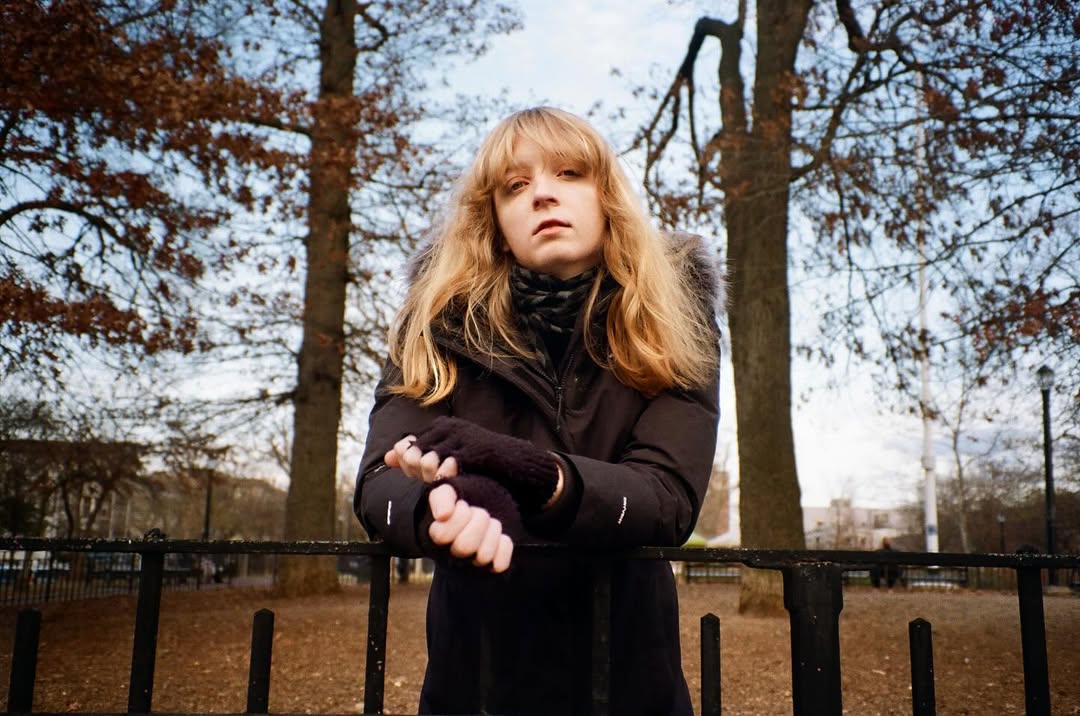
In dancing on the line between the poet and the speaker, Walton is inhabiting the same territory as Louise Weard in Castration Movie, which features a couple of her songs. It is just as hard to tell the difference between Weard’s real life and the fictional world that she is creating, and mapping over it—or is it the other way around? Well, it's probably both, right?
I think trans people are particularly aware of this problem. While it’s inevitable and healthy to eventually get over the whole crazy fact of simply being trans and finally get on with our lives, we are never completely free from the moment we decided to transition. A big reason for this is that a transphobic world continues to define us exclusively in terms of the fact that we’ve transitioned, but as powerful a factor as that is, it’s not the whole story.
Every time I look in the mirror, I see the body that I have always had, but one which is also in radical discontinuity with its genetic destiny. Through the miracles of science, the support of sympathetic loved ones and providers, and my own blessed audacity, I have coaxed it into freeing up potentials it would never have evinced. In this way, my body becomes a record of a choice I made and that subsequent versions of myself continue to reaffirm, forever calling back to the crisis that re-birthed me.
Am I the woman re-created in her own image, or am I the re-creator, the un-man who still makes their presence felt sometimes behind the curtain of her? Day to day, moment to moment, I am either or both or some third thing. I find, despite my yearning and genuine effort, that I cannot ever completely become anyone, in terms of gender or anything else.
Taking up the cliché of a trans person being “trapped in the wrong body,” you might say that the realistic outcome of transition is simply to be trapped in a less disagreeable body. To not be trapped is not an option, and that goes for cis people too. We are all, simultaneously, the Alex Walton who continues past the album and the Alex Walton etched onto the album forever. The distinction is important to make, but we can never entirely be severed from each other or combined with one another. “take me home with you and hopefully i won't have to think about any of this anymore,” she says in the liner notes. Yes, hopefully.
In the arena of social media, everybody has become an artist who faces this problem. The impressions we leave of ourselves are a currency of our lives. We find ourselves judged, usually to no great consequence, but also frequently, for particular things we have said. Entire personalities are extrapolated from fleeting opinions and cheap jokes. The artist, a changing, dynamic soul hurtling deeper and deeper into time, is fully equated with unliving remnants.
Alex Walton's state of abjection is not particularly unique, and in many ways the record is a confrontation with her own banality in the face of dreams of artistic grandeur. “a vessel to contain the worst year of my life,” she writes of this record in her liner notes. What she has done in revealing so much of herself is embarrassing to do (I know, because I have made art like this), and I think she wants us to understand that it is embarrassing to do. I have no business knowing this much about her, and neither do you. Frequently, Walton reminds us that the people she is talking about are real people who hear her music. They could be you—then what would you think? It might not feel so refreshingly honest. In “Ten Thousand Friends For My Best Song”, she stops to inform someone she’s presumably had a falling out with that she is not going to say “a bunch of really mean stuff” about “a German movie we both watched on two separate screens at two different times,” teasing her power to influence the reputation of the person in question for both friends and strangers, as well as to broadcast her own moment of pettiness for years to come. What a crazy power to discover in yourself, when at first all you wanted was to be compelling.
How can we reconcile with the fact that other people are always a step behind us, looking at the frozen impressions of us as if they are who we are today—and even worse, who we will be tomorrow and forever? By the end of this record, you would've had to have not been listening at all to think that you have learned anything about the true Alex Walton. All you know is what she told you she was like in her early 20s. It is this Alex Walton, the one on the record, who is asking you to kill her.
You have the gun. Will you pull the trigger?