Lost in Space
On fifth grade, youthful cross-dressing, uncontrollable tween anxiety, inspiring female villains, and the time my body tried to destroy itself.

It's always interesting seeing a little kid staring at me when i'm out in public. They don't usually look afraid or disturbed. It's more like they are encountering evidence that the world is a stranger place than they realized.
I must have looked similar the first time I saw a trans woman. My mother, in need of some new article of clothing, had dragged me along with her to the store. There she was, just browsing.
I remember being sort of bewildered, not so much because she appeared to be a man adorned with feminine signifiers shopping for women's clothes, but because she was playing it, as it were, absolutely straight, as if this was just something a man you could do—just start being a woman one day. She didn't look garish or camp, she wasn't doing a drag act. She was just flipping through the rack, scrutinizing dresses. What a queen. I hope she's doing great.
This was in, I believe, 1996. I turned 10 in the summer of that year and entered the fifth grade in the fall, marking the beginning of one of the most difficult years of my life—really the first difficult year.
My mother thought the trans lady sighting, which probably occurred around that time, must’ve been distressing to me, and she struggled to explain what I’d seen, but it didn’t leave much of a conscious impact. Of course, many really important things fail to leave conscious impacts, and sometime later, I cross-dressed for the first time, grabbing an old Halloween wig and maybe a bedsheet or something from my sister’s closet and sauntering down the stairs like a grand old dame—think Gloria Swanson in Sunset Boulevard, a reference point I might have known through a Saturday morning cartoon parody. I felt great in these flowing clothes and long hair, raggedy as they were—proud and dignified in a way I couldn’t be as my normal self.
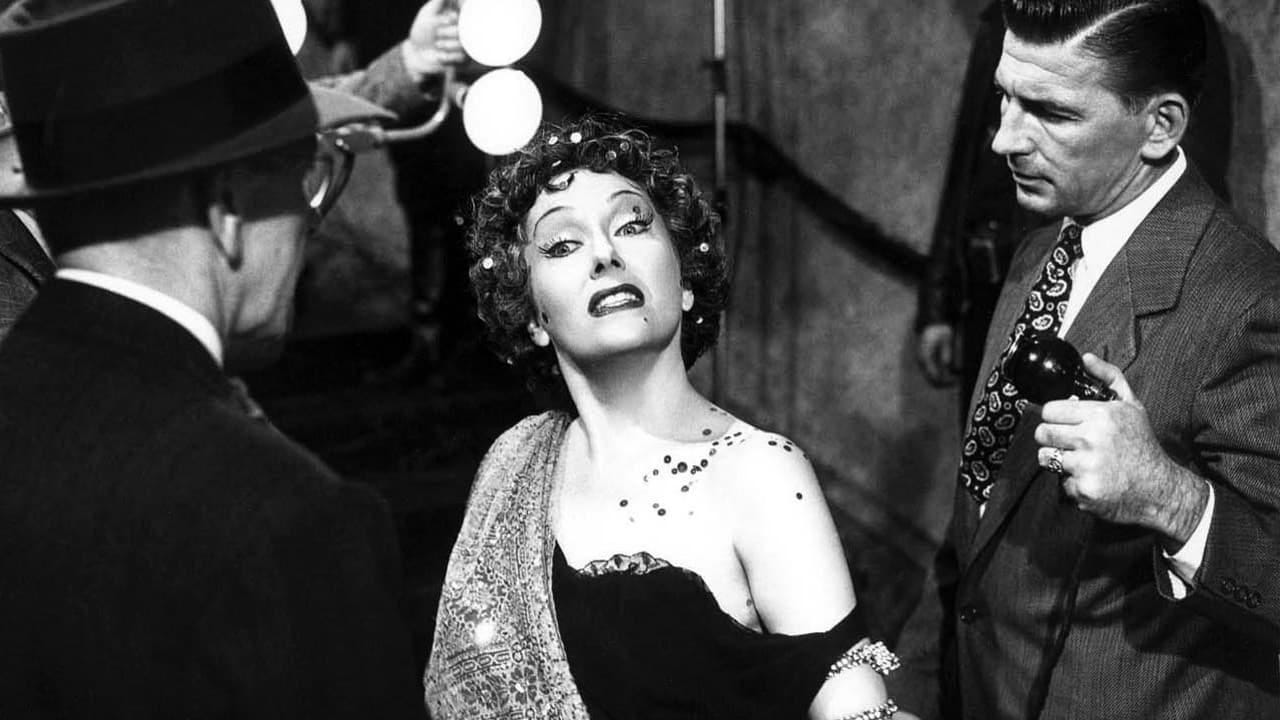
The second my dad saw me like this he lost it, shouting at me in a way he only reserved for the most egregious transgressions. Since I was used to performing and doing impressions for my parents’ amusement, I was baffled and frightened by such a violent rejection of what, to me, was just another one of my bits. My mother was upset, I believe, but my father was so livid that I don’t even remember my mother’s reaction. Of course I ran the fuck upstairs and changed out of the costume, but I was annoyed. I was a highly obsequious kid, quick to own up to any wrongdoing and ordinarily accepting my punishments as wise edicts, but this just seemed ridiculous. What had I been doing wrong? He was a little crazy for this, I decided.
Not long after, my dad, anticipating the inevitable arrival of puberty, gave me his first installment of The Talk. These things called hormones were going to start surging in my body and change it, he explained. This was how boys became men and girls became women—but occasionally something could go wrong, which could lead, for example, to a girl having a really bad case of acne or becoming a lesbian or something. Probably I wouldn’t have to worry about that, but I was about to start changing.
I found this pretty wild, but it didn’t sound like there was anything I could do, and it wasn’t happening now, so I wasn’t too actively worried about it until one night, lying in bed, when I realized I had a crush on a blonde boy in my Cub Scout troop. I barely knew what it meant to have a crush, but I knew it when I felt it. It was the first time I’d ever felt something like that. It felt nice, but that feeling didn’t last more than a split second, because I quickly realized this meant I was gay. It was already happening—I was becoming a freak.
I knew only vaguely more about homosexuality than I did about transness, which is to say, virtually nothing. I knew what “gay” literally meant—when men love men or women love women in the way men and women normally love each other. But I didn’t know what any of that really meant. More importantly, there was a different definition of “gay” on the playground, on the school bus, and in the hallways, where it was a general adjective for anything that just wasn’t it—that was stupid, boring, edgeless, feminine.
There was some kind of relationship between the two definitions, but it wasn’t totally clear. All I knew was that I had a crush on a boy and that was going to make me an outcast.
For the next few weeks, the fear that I was gay repetitively intruded my awareness, and I vainly tried to come up with counter-thoughts to banish it. This mental activity was so consuming that I wasn’t able to concentrate on anything else, even fun stuff like TV and video games. I lost most of my appetite, had trouble sleeping, and became a miserable, haggard husk. Underneath everything I saw or thought, the fear seemed to be wriggling like a hideous worm, mocking me for thinking I could escape it.
I think I cracked because the moment of recognizing of that first crush, I perceived a boy, for the first time, as different from me in some fundamental way, as having some basic quality of gender I was supposed to have, but didn’t. My boyhood was negated, but it didn’t lead to a perception of girlhood. Instead, it just led to a feeling of non-entity, disorienting and strange—an exclusion from masculinity, into some genderless, uncertain wilderness.
My parents were baffled. The idea that I might actually just be gay or bisexual was not something they wanted to face any more than I did. They sent me to the school guidance counselor. She was more liberal-minded, assuring me it wasn’t bad to be gay. She had gay friends, she said, and they were living happy, productive lives. That wasn’t what I wanted to hear, through. I wanted nothing to do with it.
The obsession petered out eventually—it was just too taxing to sustain, I guess. For the next decade, I’d experience bouts it, but they were never as bad as the first one. I guess I just learned how to dissociate—an indispensable tool in any trans kid’s arsenal.
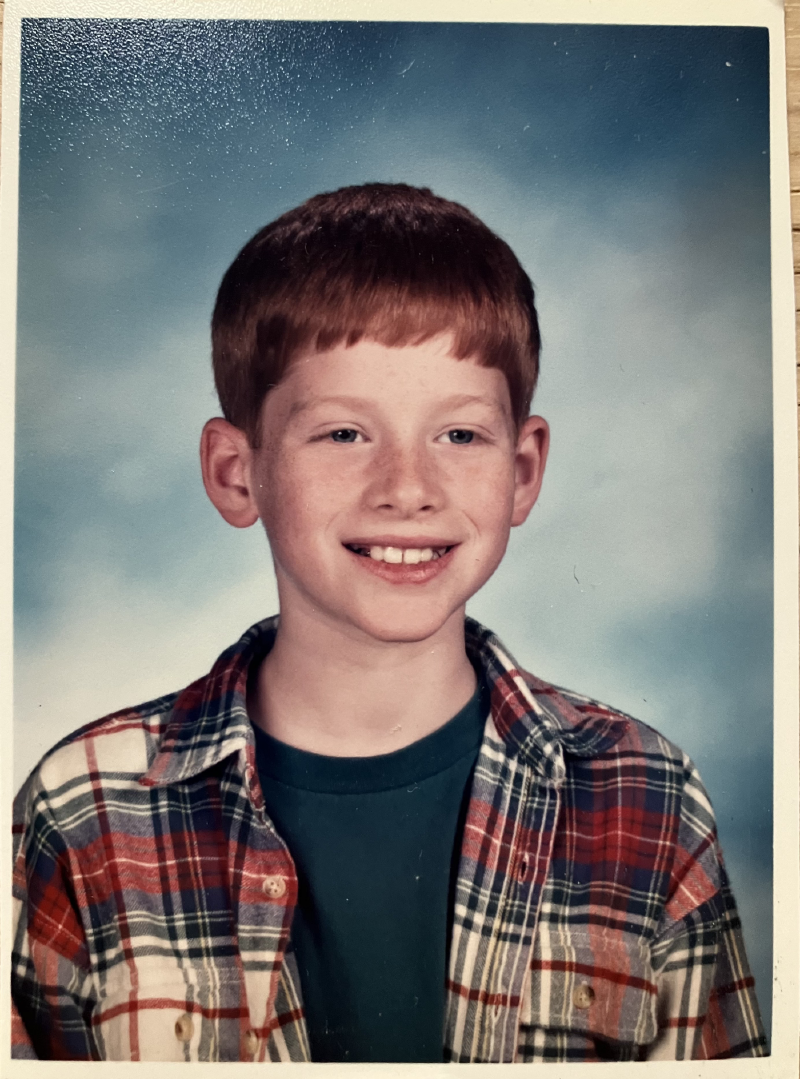
In the middle of the fall of 1996, my family moved inland from the coastal town we’d been living in since I was two and a half. In the old town, fifth graders were the oldest kids in the elementary school, but in the new town, fifth graders were the youngest kids in the middle school. Suddenly I was riding the bus with kids who were well into puberty. I was sort of enamored with one of the eighth grade girls. She spoke in long, profane, over-the-top monologues—I don’t remember her having any friends, just monologuing at everyone, but that can’t be true. She seemed to know about all sorts of things about the world that I couldn’t fathom—not facts, but experiences. I never interacted with her, but one day she saw me playing with the dust that was visible in the air in the morning light, and pointed it out how cute it was to everyone. I was used to being teased for my way of moving and talking, so I got tense, but I realized she was expressing affection—that I was a child to her, and that she was something else to me—not an adult, but not another child either.
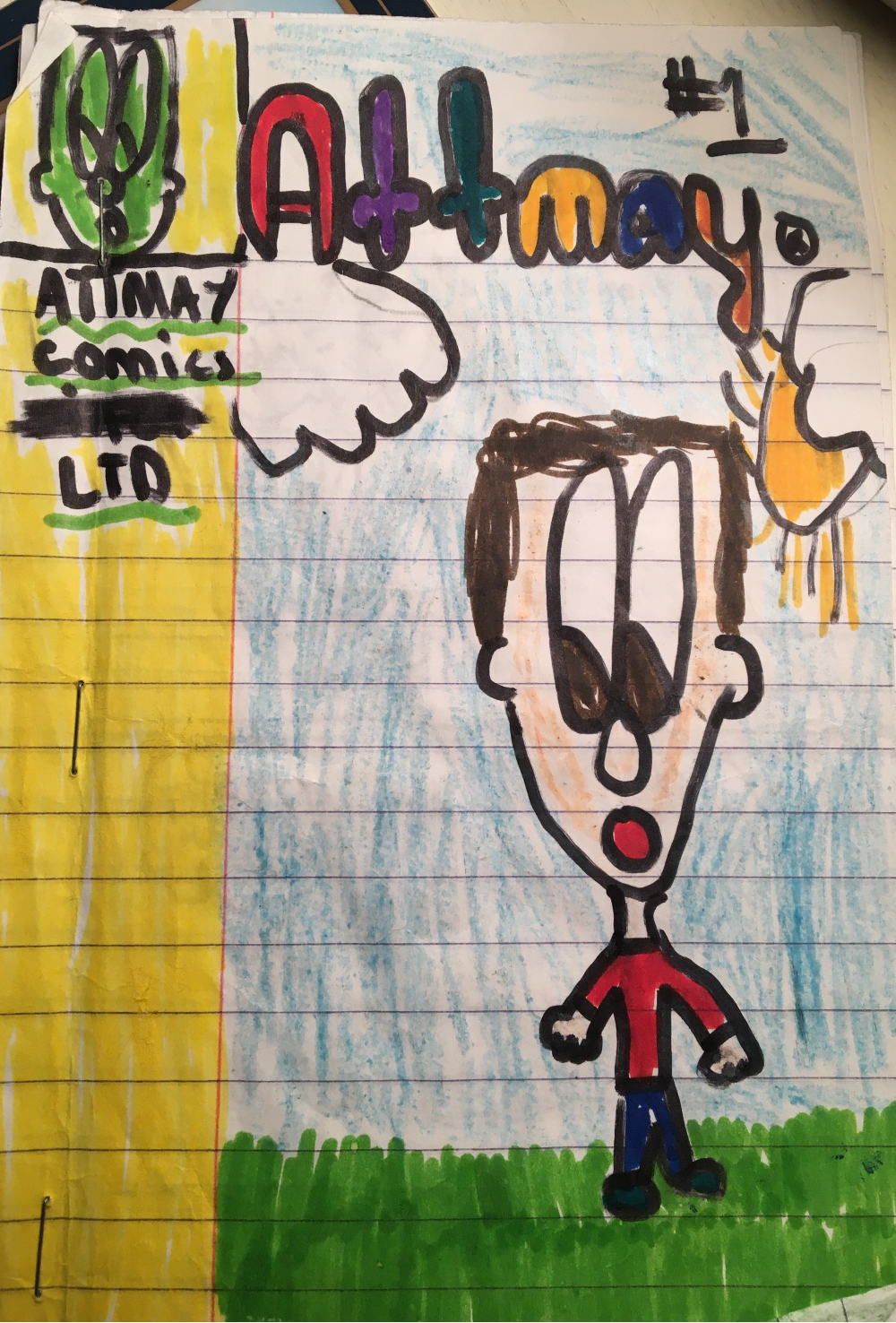
In the old town, I had a few friends and was beginning to come into my own as a clever little nerd who drew comic strips. In the new town, I struggled to make any new friends. Some kids would talk to me, but nothing seemed to turn into a friendship. Everyone seemed to have their friends already. Other new kids showed up, but the first one abandoned me after getting to know some other kids, and the next built her reputation by becoming my bully. Eventually I gave up trying to make friends.
There was a kid I liked who was blonde, like the Cub Scout boy. He had a kind of Macaulay Culkin/Bart Simpson kind of thing going on. I was a horribly literal kid, the last to get the joke, and I wanted to be like him—funny, quick-witted, a step ahead. We never became friends, but he didn’t seem to hate talking to me. We sat next to each other in language arts. A girl sat with us, who he seemed to be friends with from before I got there. I liked her too, and I liked to watch the blonde boy flirt with her. He called her Bird Woman. I’m not sure exactly why—I think it had to do with her long neck and her nose. She didn’t like being called Bird Woman, but I think she liked the attention. I sat in the space between the two of them, non-entity, just happy to be there.

In those days I was uninterested in doing much of anything except playing video games. I’d gotten a Game Boy in first grade, and a Super NES in third. Prior to getting the Super NES, I was a voracious reader, but all I cared about now was Super Mario, Donkey Kong, and, most of all, Chrono Trigger, a simple RPG involving my favorite subject, time travel. Although it’s much shorter and less involved than its contemporary cousin Final Fantasy VI, Chrono Trigger’s length, endearing characters, and immersive world were unlike anything I’d ever seen in a video game. After playing it at a friend’s house back in the old town, I’d become so enamored that the friend had to pretend he’d lost the cartridge to get me to do anything else. I finally got my own copy at Christmas.
I was inordinately regretful as a kid. Whenever I made a mistake, I felt horrible about it, and fantasized about traveling back in time to fix it. It seemed unfair that we only got one stab at so many things—that we couldn’t, as in video games, repeat experiences endlessly until we got them just right.
In the new town, the fantasy of time travel gripped me even harder, because so many people, places, and things I loved—and a lot I hadn’t even realized I loved—seemed to be slipping away from me. The old town was picturesque and historic, but the new one was like most of America, full of loud highways and interminable strip malls. The apocalyptic “bad ending” of Chrono Trigger, in which the Lovecraftian monster Lavos emerges from his slumber in the earth to destroy the world, felt real to me. The snow that fell that winter looked to me like the mountains of windswept ash in the game’s unhappy future of A.D. 2300. The game offered me a chance to do, to its world, what I couldn’t do to mine.
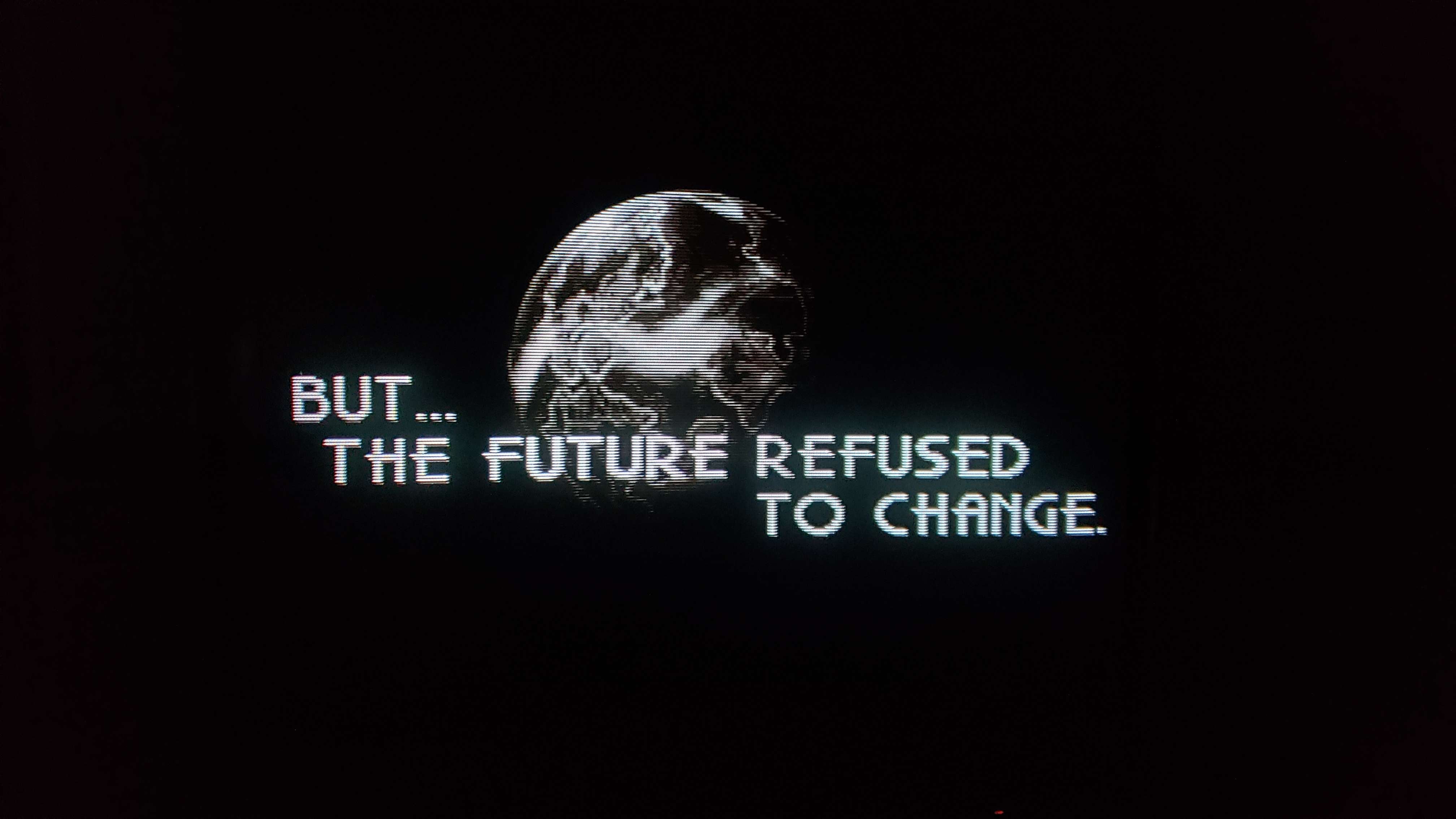
Shortly before Christmas, my own Lavos had emerged. I came down with a rare auto-immune disorder that caused fevers, severe arthritis, and a freaky-looking polka dot rash beneath the skin. Before the illness got so bad I had to leave school, I would show the rash to the other kids, my ability to disgust them being the only social joy I had left. When the rash, which was actually a field of burst blood vessels, began appearing in my gut, it caused vomiting and horrible pain. I was in the hospital for a spell and had to stay home from school a lot during this time, becoming even more isolated.
I had a second bout of the illness later on, in January or February. It was much more severe this time, and I spent a lot more time in the hospital. It was a teaching hospital, and since I had a rare pediatric condition, students would come to see me throughout the day, poking me in the same places and asking if it hurt, and I’d say yes or no. I enjoyed being a medical curiosity at first, but after a while it became irritating.
I knew I wasn’t going to die, but it was the first time in my life that I really thought about what it might mean to really die, not just ascend to heaven like in cartoons. I didn’t understand that my body was actually attacking itself—that it had come to recognize itself as a foreign invader. If I had, I wonder what I’d have thought.
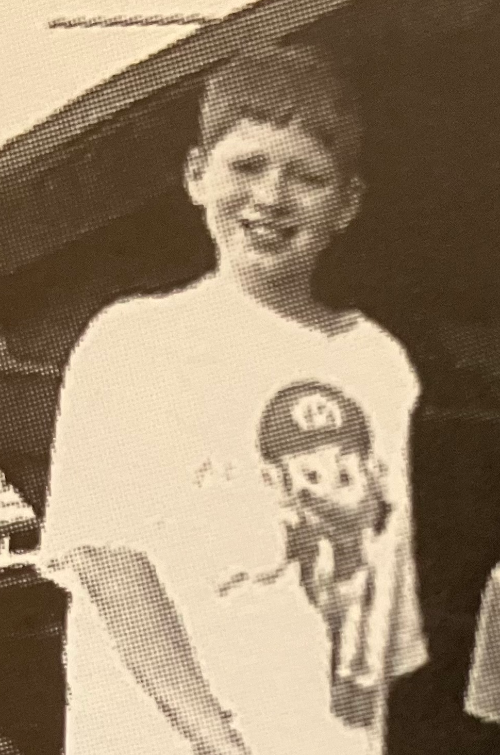
The doctors suppressed the disease with a powerful steroid called prednisone, on which my faced puffed up bizarrely and I gained a ton of weight. I was bullied pretty severely for it in school and it was a great embarrassment to my mother, who seemed terrified that her beautiful child had become ugly. I didn’t like looking this way, but I couldn’t afford to regard myself as hideous like she did, because I had to actually be me. Later, she would rip up most of the photographs of me from this time, proof that I wasn’t the only one who would’ve liked to have changed history.
As I said, I stayed home from school a lot during the two bouts of the illness. My parents, fearful of my obsession with my Super NES, confiscated the device for a while, which led me to watch more TV and start reading books again. One of the books was The Magician’s Nephew. Like all of C.S. Lewis’ late Chronicles of Narnia books, it is deeply weird. In this rewrite of Genesis, woman doesn’t arrive as a companion to man, but as a malicious stowaway from another world. Her name is Jadis, the last Queen of Charn, and someday she’ll become the White Witch in The Lion, the Witch, and the Wardrobe. Jadis is not only the last queen of her world, but the last person from it, because she spoke the “Deplorable Word” to win a war, destroying everyone but herself.
With Jadis, Lewis manages outdo the sexism of the original Bible story, positing womanhood as forever alien, forever unassimilable to justice and order, willing to destroy everything for the sake of its own satisfaction. Nonetheless, she’s charismatic and fascinating—Lewis ends the novel with one of the characters, Uncle Andrew, wryly conceding that she was a “dem fine woman.” From what cold, pagan recess of his mind had she sprung?
Many copies of the book have a cover illustration of the two child protagonists riding a pegasus, but mine one had a picture of Jadis by Leo and Diane Dillon. I could not believe this lady. She was incredible.
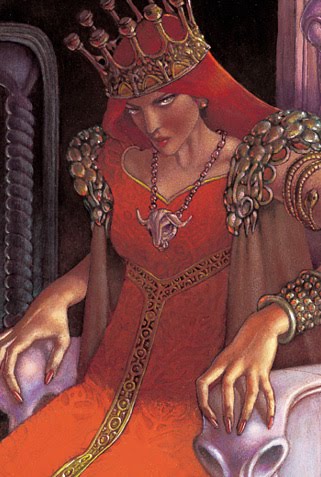
Sometimes I wouldn’t even keep reading, I’d just stare at Jadis on her forsaken throne: her immolating beauty, her smoldering rage, her gaze of vengeance piercing the picture plane, lit dimly by the sun of her dying realm. You can almost hear those nails, stiff with determination, clawing the stone. I often dreamt of being a girl—it made more sense, in a way, but most girls were alienating to me. Too many seemed fussy and insecure, and they usually cared too much about being nice. All their books and games were about things that bored me, like romance and friendship. But here on this book cover was a different kind of—well, not a girl at all, but a woman, one who knew nothing of love, only power, the sort of power only a woman can have.
In the midst of my bullying, I had felt rage. I understood why one might want to utter the Deplorable Word. Perhaps I wanted the secret of Jadis’ ferocity, for her to share with me her own lust for survival. I don’t know. She just spoke to me, named me. Art can do that for you—even cheap fantasy art.
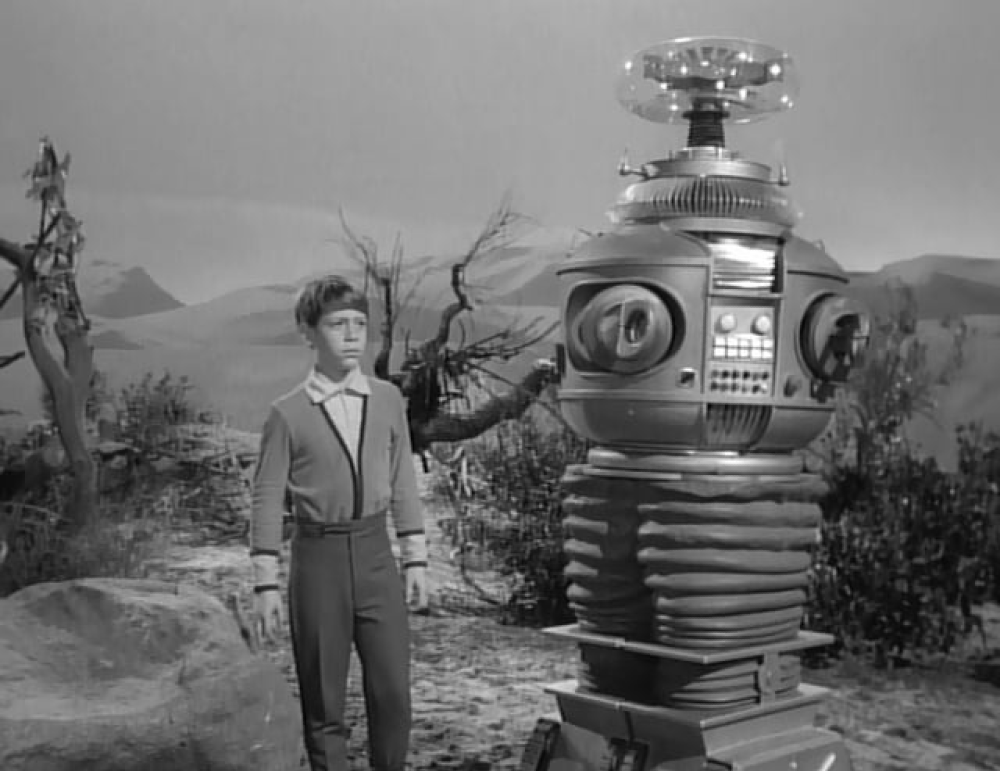
I also began watching reruns of Lost In Space, a campy TV series from the 1960s about a family of geniuses, the Robinsons, sent on an exploratory mission to Alpha Centauri. Thanks to a nefarious stowaway, Dr. Zachary Smith, they end up way off course and spend three seasons trying to get home. I connected with Will, the youngest child. He had red hair like me, and he was supposed to be a boy genius, which was a flattering fantasy. He was supposed to be a boy, of course, but he felt sort of genderless. His sisters Penny and Judy were teenagers, but Will hadn’t hit puberty yet, and he had none of the mischievousness or snark of typical TV boys—he was earnest, loyal, obedient, and morally upright. One could imagine he wasn’t always the first to get a joke either. He spent a lot of time with the ship’s trusty robot, just like I spent a lot of time with my Super NES, and just like the lesbian-coded girl genius character Lucca in Chrono Trigger had a special relationship with that game’s android, Robo, whom she’s often depicted tenderly repairing.
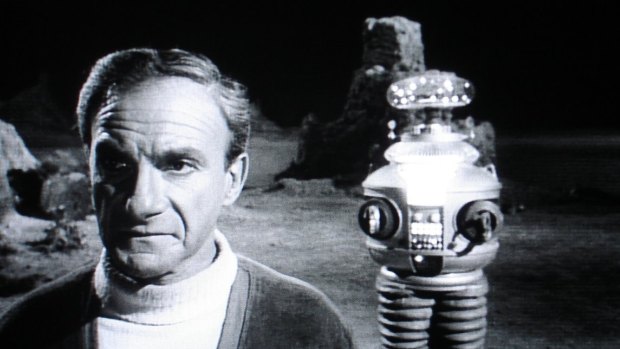
Dr. Smith, however—pathetic, petty, vaguely effeminate, speaking in a ridiculous faux-Shakespearean register—was the true main character, the mark of original sin on this perfect American family. Continually, his meddling caused problems, but the family never abandoned him—it was a matter of honor, I guess. He was coded as “gay” in both senses of the word as I understood them—seemingly homosexual, but also just an annoying loser. Reflecting on the TV of his youth in his autobiography, Morrissey cringes at the character’s representation of male queerness, but gives credit where credit is due to Smith, “who, in his maggoty bitterness, provides all of the fun, and whose command illuminates the very smallest of actions.”
Will, Dr. Smith, and the robot formed a kind of trinity of masculine ineffectuality—Smith the cowardly, selfish adult, Will the well-intentioned, bright, but ultimately naive child, and the robot a cumbersome figure of pure logic who could only think in terms of things “computing” or “not computing.” Although Will could sometimes get them out of scrapes, they were usually rescued by the dashing Real Men in the party. I knew I was like this trio, somehow. All of them. As I got older, I’d also seek the protection of guys who seemed less afraid to be men.
Filled with cheesy sound effects and ridiculous plots, Lost in Space, a dream of the future that couldn’t help but recall the past in which it was made, had a way of warping time, which made it an ideal show for a kid confused about the present. Beneath all the silliness and low-stakes drama, there was something melancholic about the series, a sense that even with all of our fabulous knowledge and technology, humanity was woefully ill-suited to take on the cold, immense Universe. The Robinson family was never going to make it home, but I desperately wanted them to.
In fifth grade, I learned that I would never get home either. I became aware of how big the world really was, how complicated people were, how fragile my body was, and how lonely I could become. I sort of wish I did have a time machine, so I could go back and tell that kid it’s going to get better, but to be honest, it took 25 years for it to really start getting better. I guess I’d like to reassure him that even though he’d be miserable for most of his youth, he would always actually be fine. He just needed to hang on.