TFW You Want Him to Love You
On liking men and Natalia Catalan's album "Die Without Makeup"
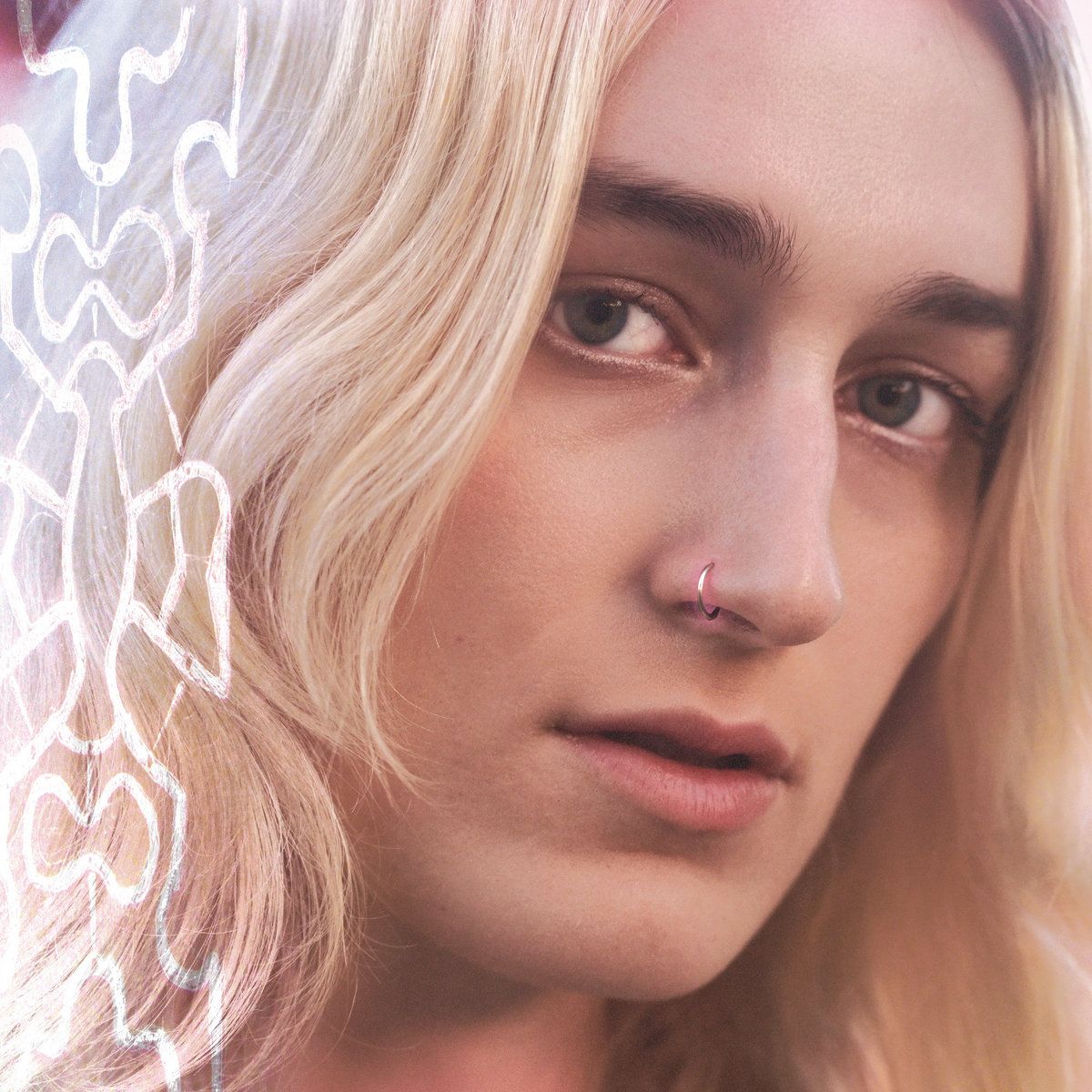
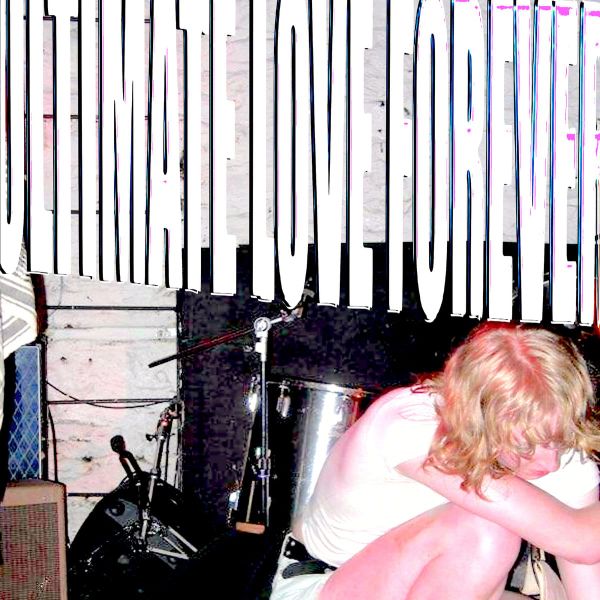
Natalia Catalan’s album Die Without Makeup has been haunting me a little, in a good way. I’ve listened to it many times in the last few weeks. It’s so short, at 18 minutes, that I sometimes listen to it twice in a row, but it’s so strange and elusive, so densely packed with evocative moments, that it feels like listening to a slightly different album every time. If you define an album in terms of length, it’s more properly speaking an EP, but it has an album’s number of tracks—11—and it feels like enough of a journey to be a whole album. Life is both short and long, and so is Die Without Makeup.
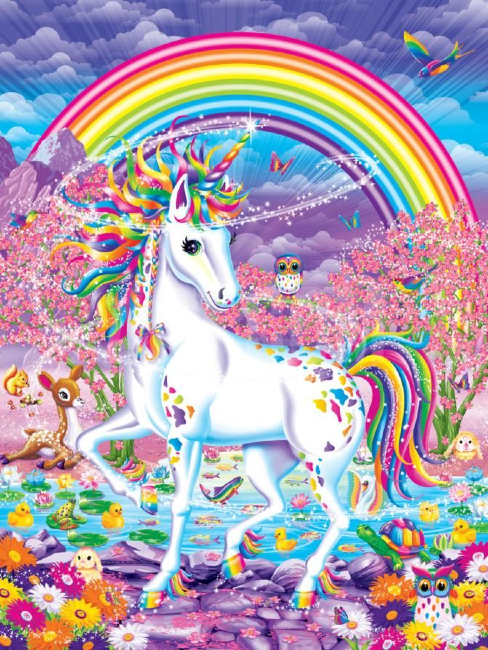
Who is this angelic being who describes her own work as “Dumb Blonde 40-Inch Vertical Noise Easy Listening Educator Mother Daughter Standard Deviant Art,” and whose guitar makes such a delightful array of funny little noises? Natalia Catalan is an amazing guitarist. Dumbass teenage boys will tell you that flashy, technically impressive solos make a great guitarist; they are wrong, of course. Some guitarists are mere gymnasts, and they can be immensely entertaining for this—Eddie Van Halen comes to mind. But Eddie Van Halen has never communicated to me emotionally through his guitar—he’s actually on record, proudly it seems, saying he doesn’t even listen to music anymore. Natalia Catalan is technically impressive (quite), but what matters more is that she uses the guitar to make me feel all kinds of things. It twinkles, it scrapes, it warps as if in a defective mirror, it sparkles like eye shadow. Jimi Hendrix (who was both a great gymnast and a great emotional communicator on the guitar) used to talk about musical feels in terms of colors— “Gimme something orange,” he’d say to his bandmates, and they’d have to do something with that. Natalia Catalan’s color palette is much the same as Lisa Frank’s: hot pink, sunset purple, puppy yellow, electric rainbows of forsaken 90s neons.
Of course a woman can play guitar however she wants. The pioneering trans rock guitarist April Lawton played in a very masculine way, fusing Hendrix and Jeff Beck. So does the iconic punk shredder Marissa Paternoster, who I saw one time live in the 2010s and it nearly killed me. Examples abound. It’s cool and hot when girls out-dude the dudes. But Natalia Catalan’s playing and her whole musical ethos is distinctly feminine, and it’s an androphilic femininity.
On the Internet, where lesbians are wildly overrepresented among trans women1, this last point is lamentably notable, such that it almost feels like a provocation—emphasis on almost. It’s not, but the climate makes it almost feel like that. Some trans lesbians can be quite misandristic in their casual discourse, and they have good reason: like most “girls like us,” they were victimized or at least very often uncomfortable growing up sorted with the boys; later, as women, they experience misogyny on top of this; finally, they lack the incentive to sympathize with men (at least some of them) that comes with being androphilic. Their feminism is vicious, and we love them for it, but I think they sometimes forget that the majority of us are bisexual or straight2. Yes All Men, but we still like guys, in spite of everything, and actually want to befriend and date them—at least in theory, lol. The old adage that a good man is hard to find is twice as true for trans women, too many of whose male suitors prove to be craven chasers. Many other men, meanwhile, are riddled with anxiety about whether or not it makes them gay to want us, but this is only a shield for their more fundamental anxiety about liking women in the first place3. Then, of course, there are the kind of men who will kill [REDACTED] for you, even though you did NOT ask them to.

The point is it’s rough out there, and that gives transfeminine androphilia a unique sort of vulnerability—not, perhaps, greater than the androphilias of cis women and gay men, but unique. Natalia Catalan sings about boys a lot—if she’s bisexual, she’s not sharing her sapphic side on this album, from what I can tell. Die Without Makeup creates a scattered, fragmented world of desire and affect, juxtaposing tender longing with floaty dissociation. For me, this is one dimension of what it feels like to like guys. It feels like being open. There’s a certain kind of risk. There could be safety or danger, gratification or humiliation, and you’re never sure just which you’re going to get—if all your trust might end up suddenly, callously mocked, or pitilessly rejected.
And this is love, of course. The stakes are high, even if you’ve been around the block a few times. “I want a world that isn’t ending,” Catalan says on “I Want Him to Love Me.” This is the promise that love holds out, which consumes us in heartbreak when it turns out that world is, and always has been, still ending. What a beautifully fragile thing to have in 2026: a crush. It almost seems insane to imagine such a thing, which always seems to belong to a more innocent life, manifesting in this busted-ass world, but it happens all the time.
“How could you love me, love me, love me/ Before you had even seen my sex?” asks Catalan in “Waist”. She’s already in pain from having to wear a corset: “Waist is sore, I don’t wanna hurt anymore/ But you asked to.” Her phrasing is very precise here: You asked to, not You asked me to. By erasing herself as the subject of her request, she emphasizes his desire as an arrow that shoots right through her agency on its way to her body and how he wants it to look. To let the arrow through, to accept the self-erasure, is an act of love—romantic, but costly: I gain love, but I lose the self who is loved. Women make this kind of deal all the time. There’s no need for a metaphor or simile—the corset is already literally the emblem of the process. But on top of this, Catalan has a uniquely trans anxiety: “How could you love me, love me, love me/ Before you had even seen my sex?”
That’s the sort of stress that kinda makes you want to leave your body. Catalan’s vocals in this song, soaked in reverb and pitched up a little, sound agitated but already distant. The scene breaks apart, reduced to a set of images: “Corset/ Tattered/ Harness/ Bathroom". Everything is so precarious…
Memoir break: I remember the first time I wore a dress—this was long before I admitted to myself that I was probably a trans woman. I was 29 years old, and it was, of course, a “Halloween costume.” I’d only ever worn pants. The feeling of the air flowing up between my legs was kind of nice, but it also felt sort of unsafe. I felt I needed protection, a friend to look out for me. At the Halloween party, a male acquaintance slapped my ass. If you believe Dr. Ray Blanchard (and God help you if you do), you’ll expect this to have titillated me, but I was mostly insulted. I felt vaguely betrayed by this guy. All I had done was put on a dress and makeup, and he suddenly thought he should be able to slap my ass?! My cis woman friends thought my outrage was quite amusing.
I had crushes on boys and girls as a kid, but the ones on boys felt dangerous, socially and emotionally. I never admitted to them, even in my private thoughts. They manifested, therefore, entirely on the level of emotion—feeling red faced and sweaty in front of a guy for “no reason,” dreamy idealization of a friend or classmate who was frankly terrible, a thought-blocking lightheadedness when a friend who worked out took off his shirt, a displaced obsession with so-and-so’s girlfriend, who I didn’t have a crush on so much as just wanted to be, not least of all so I could have him to myself. All my life, I’ve been told I “think too much,” and this was and continues to be good feedback. But the other side to this trait has been a capacity to not think about something. And aside from my transness, to which it was intimately connected at any rate, there was very little I didn’t think about harder than liking guys.
I never ended up being with a man, even for a night. As an ostensible straight guy I had very few opportunities, and I didn’t go out of my way to create them. For one thing, I didn’t want to be with a man as a man; for another, I resented other men far too much to consider them worthy of romantic affection. A few girls had bullied me as a kid, but it was mostly boys. Even when I wasn’t being bullied, I’d been emotionally abandoned by my male friends too many times. It never felt safe.
Leaving manhood behind has helped me detatch from some of my resentment. Men have become stranger to me as I realize more and more that I was never really like them, except on the surface, and I find them more attractive than ever for this reason. I transitioned while in a monogamous relationship with a woman, and that relationship is really good and beautiful and I hope it will last forever. Nonetheless, my attraction to men, even if I never have and maybe never will act on it, is a really important part of being a woman for me, and I’ve found a lot of healing in the process of recovering it from years of repression. It is famously hard to mend a broken heart when you won’t admit who broke it. Sometimes it isn’t who you want it to be. Natalia Catalan’s songs about boys, loaded with complicated longings, fascinate me for this reason, helping me understand what I’ve felt and continue to feel and wonder about what might have been, and whether it could have been worth it—probably not though, right? Hahahaha
I don’t have a lot of reference points for contemporary music, because I’m an old hag whose sensibilities are trapped forever between 2002 and 2012. Alex G is one of the few artists from after that era that I’ve gotten really into, and I hear a bit of his ghostly qualities in the slower, more shadowy parts of Catalan’s music. There’s a suburban isolation in Alex G, but it’s not entirely sad. It also has a certain intrigue, the point where simple loneliness and boredom traverse the borderlines of the weird and eerie, where a perception of lifelessness becomes an overwhelming sense of the abundance of unlife. There’s an Animorphs book in which the Animorphs learn that if you morph into a creature smaller than you, the excess is stored temporarily in another dimension, and if the creature is small enough—like an insect—your consciousness ends up in that dimension too. So it is when a situation becomes so psychically and/or culturally empty that its unconscious, defeating the entire point of repression, becomes much louder than consciousness—yet still without revealing itself. This is one kind of haunting, I think—the kind you feel in the parking lot of a strip mall, a feeling so common that we forget how disorienting it actually is.
Actually, it is “normal” in our culture to be this disoriented, but we only sometimes find the grace to recognize this, that there is something terribly wrong with what is “normal.” Die Without Makeup’s blessed disjointedness makes femininity and the female position in the heteronormative game feel as weird and eerie as they really are, their existence half-denied, half-obsessed over, but rarely seen in and for itself, except by feminine people. We should all be so lucky to die without makeup on. Even if we do, someone may still try to slap some on our corpse for the funeral.
Scenes and images appear in Catalan’s lyrics, but it’s never clear what’s going on. “2 Boys” whirs to life at a frantic, ramshackle pace that comes as a bit of a shock after the much more languid opener “To the Bone”, reminding me of hyperpop’s eye-popping intensity but also the Feelies’ neurotic “Fa Cé-La.” The lyrics show us the titular boys kissing in the following positions: on the back, on the mouth, right in front of Catalan, on Catalan’s “love-shaped heart.” Something about going to the store, something about a movie not starting. “Raining cold/ I got what I want.” Are the boys in the movie? Were they in real life? What did Catalan want? Why does the cold rain feel so evocative? Maybe because it’s the only line that puts the body in a sensory space. You can scarcely wonder about all this before it’s already over, giving way to another, equally inscrutable anti-story.
Karly Hartzman of Wednesday, another band I’ve been into lately, has a very lucid style of storytelling that comes out of her country influences. You know exactly what she’s talking about—it’s situated in place, character, mood. She paints a picture. Catalan, by contrast, cuts out and glues a collage from moments of anxiety and affection—seemingly chaotic, but operating according to its own implicit logic. It takes a little more work to figure it out. You can’t lean back into this music—it must impart to you a bit of its unsettledness. The collage mindset feels very trans to me, and I think it is, but it’s also just the consciousness of a lot of younger people and increasingly all of us in this brain-fucking, trash-tech society. What’s going on? Who are we? We never really knew, but it was possible at least to think you knew. That’s getting harder. Perhaps some of the backlash against trans people is a rejection of this pervasive identity crisis, which we represent more conspicuously than most people. But show me someone who doesn’t represent it, at this point!
Catalan’s voice is as liquid as her guitar. Sometimes we hear it in what I take to be her ordinary register, other times it’s chipmunked up, others times it’s very chipmunked up, once or twice it’s artificially deepened. I feel like a lot of Gen Z musicians have been messing around with vocals, through which all sorts of meaning can be suggested. When Catalan artificially raises her vocals, she sounds like a chipmunk indeed—a harried little creature, which is a vibe. Even I am 6’1” and 39 years old, but I feel like a harried little creature all the time. My partner says I seem tiny sometimes. I am reminded of the great meme:

There’s another side to this. As kids, most trans women learn to speak with male inflections— clipped, flat, assertive, and with a bit of weight to simulate the balls being swung around. What once helped deflect accusations of faggotry becomes a liability when our bodies feminize, but our speech remains the same. Retraining the voice is a realistic goal, and its most advanced students develop an utterly unclockable voice despite the permanent effects of testosterone on the cords, but not all of us want to do that work. Some of us were fortunate enough to transition before puberty—I respectfully envy them. Some of us do nothing to alter the male coding of our voices; these women are based and I admire and fear them slightly. Some of us settle for the so-called “fagcent”—adopting feminine inflections but mostly retaining their native depth. Despite the slang term, it is actually quite different from the speech of an effeminate cis gay man. Whatever you choose, though, it’s likely to be an Issue in one way or another. The voice is immensely powerful in communicating not just gender, but a whole personality—if your voice and your physical appearance don’t match, it can be weird for everyone. Natalia Catalan’s constant shifting of her vocals call attention to the warped self-perceptions of dysphoria and the voice as a source of consternation and danger for trans women.
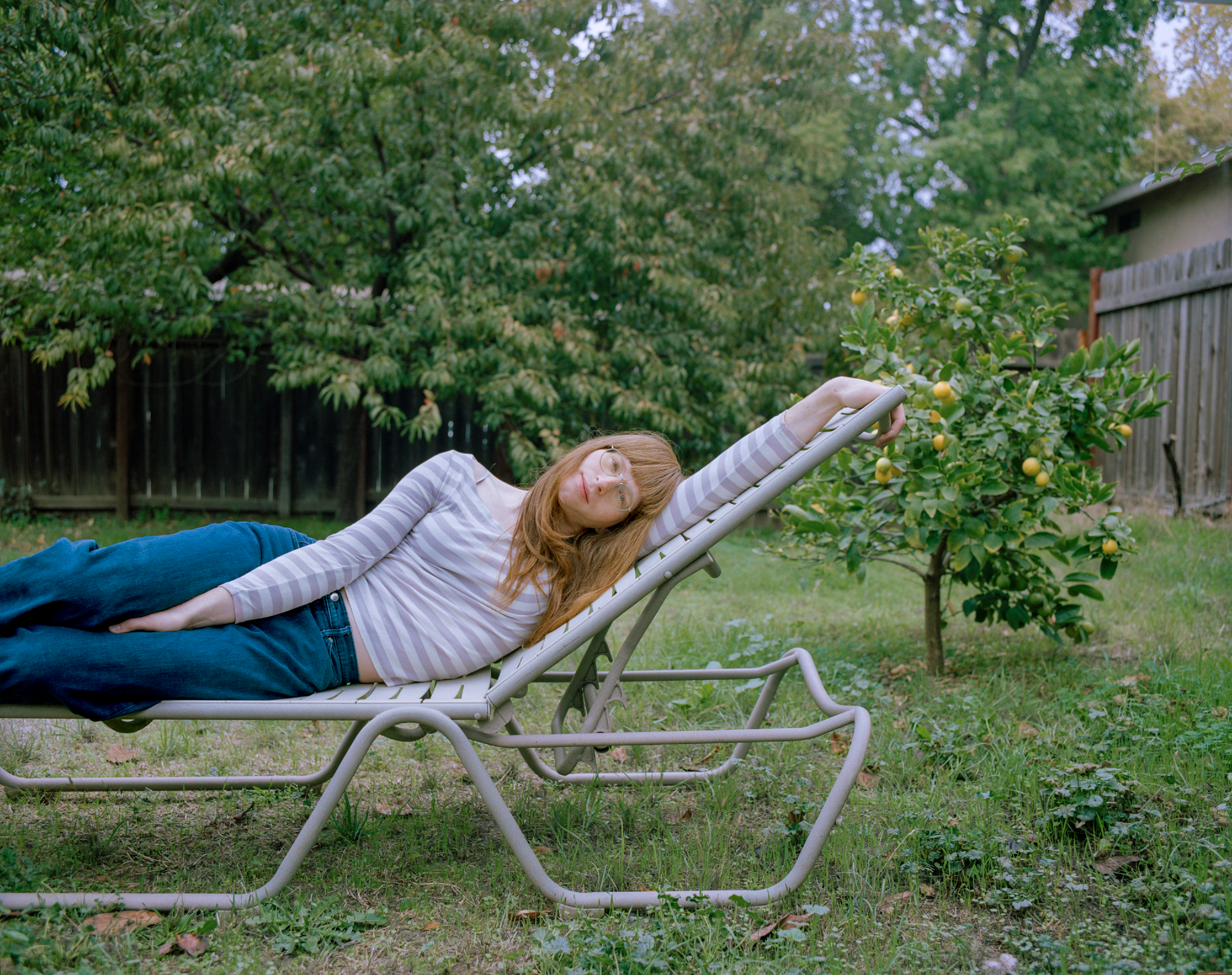

My partner Marjorie is a photographer who recently had the opportunity to attend a retreat where her work was scrutinized by several notable photographers, publishers, curators, etc. She and I are working on a book for her MFA thesis that depicts our relationship by combining her portraits of me and with my own prose poems about our domestic life during the program. As a consequence, my appearance and status as a transfeminine subject also became a topic of scrutiny for the reviewers. Most of them were normal about this, but one commented: “Her postures are more feminine than feminine.” When I saw this in Marjorie’s notes, I took it as a bit of a compliment, but she said the reviewer was implying something more like the old TERF canard that trans women project a garish, exaggerated femininity that loudly betrays a sexist, male socialized point of view.
There’s a lot to be said about this assertion—I take it for granted that my reader doesn’t need to have its wrongness fully laid out—but, among other things, I think it indicates a widespread cultural allergy to the feminine. We don’t want our women to be too girly, and we want our men able to fully repress their feminine sides, which should only emerge for the sake of romantic gestures and fatherly tenderness, especially toward daughters. The warped second wave feminism that informs TERFdom already considers an arbitrarily determined excess of femininity, even in cis women, to be a sign of internalized sexism, so trans women naturally don’t stand a chance.
The full spectrum of butch to femme womanhood can be seen in trans women; the notion that we are particularly beholden to high femininity is simply a stereotype, and if it’s true to any extent that’s only because we need to be a little more conspicuous to get the point across—it’s easier to pass, at least as a trans woman, if you’re wearing makeup and a dress than if you’re wearing sweatpants and a unisex t-shirt. In this, we face a double bind: cis people want us femme if they want us at all (butch trans women, meanwhile often struggle to be seen as women in any sense). But then, when we do flatter cis tastes, we face this cultural allergy to femininity: “Oh, so you think this is how women look all the time, huh?” Bitch no, it’s you who thinks that. I like being femme, but sometimes I don’t want to have to shave to go to the fucking convenience store. Sometimes I just want to wear my old guy t-shirts and jeans, and still be seen as a woman. In those moments I’m doing this for you. Actually, sometimes idk who I’m even doing it for anymore. Fuck. 😭😭😭
All of this is part of why I love Natalia Catalan’s vibe so much. The entirety of Die Without Makeup feels whispered into the listener’s ear by a cherished female friend, like the secrets in childhood we whispered not because they were particularly confidential, but just to practice secrecy. She too is more feminine than feminine in her music, and I mean that in the original, complimentary sense in which I received it, because it should be a compliment. It is a badass & beautiful thing to be. At the risk of being a bit cliche, the album’s kaleidoscopic inventiveness demonstrates that something can be intensely feminine—graceful, pretty, intimate, finely empathic—and also embody all of the traits we do not associate with the intensely feminine: strength, resiliency, intelligence, depth, complexity. Her music makes me feel a little less of a freak for being the way I often am and wanting to be that way. Spiritually, she’s just a total baddie. I can’t wait to see what she cooks up next.
This is an interesting phenomenon you find discussed sometimes on Reddit. From this thread, I think two comments are probably close to the truth:
“Historically, transbians would not be regarded as ‘true transsexuals’ by gender docs, who had a restrictive and heteronormative view of transness... Because of all of this, transbians had to form their own subculture in which they could survive and thrive… That subculture grew into the subculture that dominates [the] trans internet.”
“I've observed that most passing trans women tend to associate themselves less in the community to try to blend in the general society. Passing straight trans women tend to do this even more to just blend into that heteronormative lifestyle. Trans lesbians regardless if they're passing or not would still be visible in the community because dating fellow trans women is a very viable option… The straight trans women especially passing ones just tend to disappear.” ↩
The best stats we have on the actual breakdown of sexuality among trans women comes from the 2015 U.S, Transgender Survey: 27% lesbian, 36% Bisexual or pansexual, 19% straight, with the handful remaining identifying as ace or with the vaguely defined term “queer.” That’s at least 53%, then, with some degree of androphilia, or at least a potential attraction to people who happen to be men. ↩
This last statement perhaps deserves some elaboration, but this isn’t the time or place for it. If you know, you know. ↩